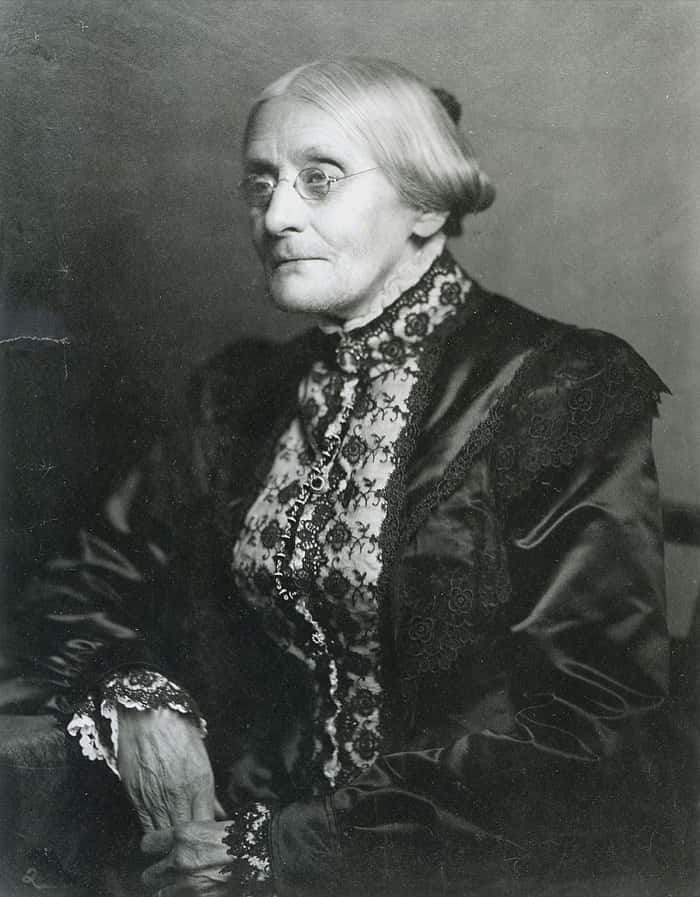
On this day in history, Susan Brownell Anthony came into the world in the small town of Adams, Massachusetts. Born on February 15, 1820, she spent her childhood growing up in a Quaker household that would profoundly shape her character. The conviction that all individuals are created equal became a guiding force throughout her remarkable life as a pioneering social reformer. Her relentless pursuit of equality made her a trailblazer, and the legacy she left behind continues to inspire movements for social change hundreds of years later.
Early Life and Influences
Daniel and Lucy Read Anthony welcomed Susan as the second-oldest of their seven children. Her father — a Quaker who owned a cotton mill — placed enormous emphasis on education and justice, values that left a deep imprint on Susan's worldview. In an era when most girls were denied such opportunities, she received a formal education, attending a local district school before moving on to a boarding school in Philadelphia.
Inequality made itself known to Susan at a young age. When her teacher refused to teach her long division simply because she was a girl, her father saw the injustice for what it was. He pulled her out of the classroom and took on the role of teacher himself. That formative moment planted the seeds of her lifelong battle against gender discrimination and instilled in her a fierce sense of justice.
Even as a teenager, Susan's devotion to social justice was unmistakable. Her father's activism introduced her to the anti-slavery movement, and by the age of 17, she was already circulating anti-slavery petitions — an early sign of the dedicated reformer she would become.
Path to Activism
Driven by a passion that burned for many reasons, Susan launched her career as an educator in 1839, an experience that sharpened her awareness of inequality. Female teachers carried out the same duties as their male counterparts yet received significantly less pay. This glaring wage gap only deepened her commitment to gender equality.
Everything shifted in 1851 when Susan crossed paths with Elizabeth Cady Stanton — a meeting that would alter both their lives and reshape the women's suffrage movement entirely. Together, they became a formidable force, launching campaigns, delivering speeches, and organizing petitions. Their collaboration reached a milestone in 1869 when they co-founded the National Woman Suffrage Association, a powerful testament to what their partnership could achieve.
Achievements and Legacy
For many years, Susan B. Anthony threw herself into the fight for women's voting rights, traveling extensively and addressing audiences across the United States to build support for suffrage. Her boldest act of defiance came in 1872, when she was famously arrested for casting an illegal vote in the presidential election. The incident captured national attention, shining a spotlight on her cause and galvanizing many others to rally behind the suffrage movement.
Anthony would not live to witness the passage of the 19th Amendment in 1920, which finally granted women the right to vote. Yet her tireless work laid the groundwork for that landmark achievement. Fittingly, the amendment is often called the "Susan B. Anthony Amendment" — a tribute to the woman whose unwavering dedication helped make it possible.