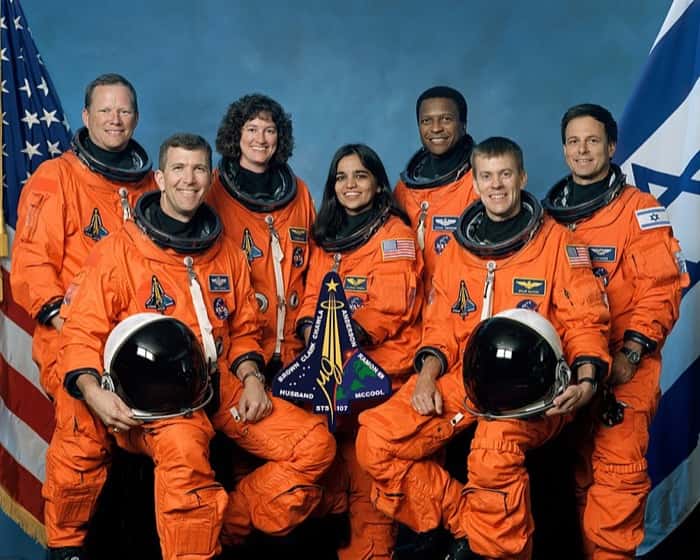
On February 1, 2003, the Space Shuttle Columbia broke apart as it re-entered Earth's atmosphere, leaving the world in stunned disbelief. Seven astronauts perished in the disaster, and the ripple effects on the trajectory of space exploration were immense.
The Mission: STS-107
Science and research sat at the heart of Columbia's STS-107 mission. A crew of seven astronauts — drawn from diverse backgrounds and countries — carried out more than 80 experiments in microgravity, spanning biology, physics, and Earth science. Among them were Commander Rick Husband, Pilot William McCool, and Payload Specialist Ilan Ramon, who made history as Israel's first astronaut. Together, this team pursued a bold agenda of scientific discovery, ultimately bringing all 80-plus microgravity experiments to successful completion. Over the course of their 16-day mission, they meticulously recorded findings and transmitted invaluable data back to Earth. Their achievements in orbit stood as a powerful source of inspiration.
The Disaster
What should have raised immediate alarm occurred during the January 16, 2003 launch: a chunk of foam insulation broke free from the shuttle's external fuel tank and slammed into Columbia's left wing, compromising its thermal protection system. When the shuttle made its return through Earth's atmosphere on February 1, superheated air found its way through the breach in the wing, and the spacecraft tore apart over Texas and Louisiana.
All seven crew members were lost. Debris streaked across the sky as NASA personnel and the public looked on helplessly, witnessing the catastrophe unfold in real time — a gut-wrenching reminder of just how dangerous and demanding space exploration truly is.
The Aftermath
In the wake of the disaster, NASA grounded the entire Space Shuttle program while a thorough investigation got underway. The Columbia Accident Investigation Board (CAIB) — an independent body — was assembled to pinpoint the root cause.
Their findings confirmed what many suspected: the foam strike during launch had inflicted catastrophic damage. But the investigation went further, exposing deeper systemic problems within NASA itself, from flawed risk management to compromised decision-making processes. The board's report called for sweeping changes to NASA's organizational culture and procedures, urging the agency to prioritize safety above scheduling pressures.
Legacy of Columbia
Memorials throughout the United States pay tribute to the seven astronauts, ensuring their names and contributions endure as an integral part of space exploration's history.
In the disaster's wake, NASA undertook major efforts to bolster shuttle safety. New inspection tools were developed, damage detection methods were improved, and stringent safety protocols were put into place. These measures stand as a testament to NASA's dedication to learning from tragedy and safeguarding the men and women who venture beyond our atmosphere.
February 1, 2003, endures as one of the most sorrowful days in the story of human spaceflight.