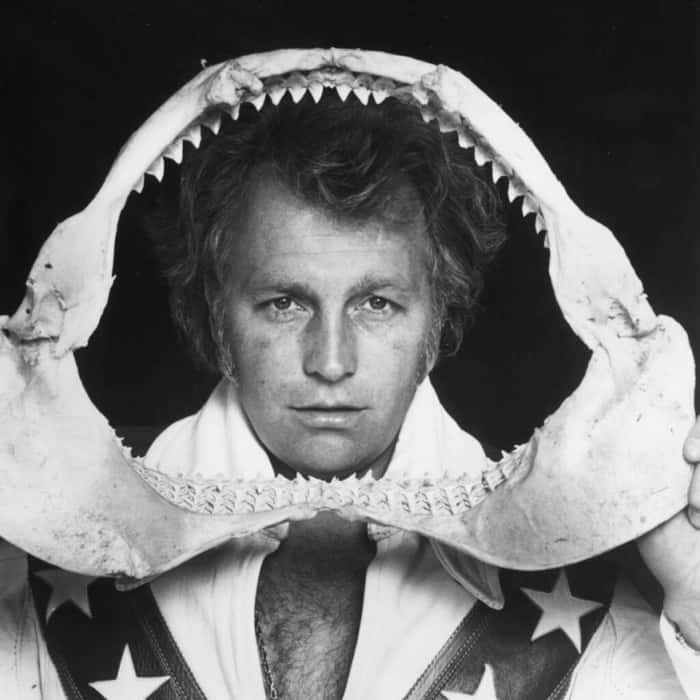
Few figures in American entertainment history could match the sheer spectacle that Evel Knievel brought to every performance. This legendary stuntman made his mark by attempting more than 75 ramp-to-ramp motorcycle jumps over the course of his career, a legacy recognized when he earned induction into the Motorcycle Hall of Fame in 1999.
Background
Born Robert Graig Knievel on October 17, 1938, Evel was the older of two children whose parents, Robert and Ann Marie Knievel, went their separate ways after his younger brother arrived. With the marriage dissolved, both boys ended up in the care of their grandparents in Butte, Montana.
A pivotal moment came when Knievel was just 8 years old — he witnessed the Joi Chitwood auto daredevil show, and it ignited something in him. By the time he turned 13, he was already behind the handlebars of a motorcycle, eager to show off his riding skills.
It probably comes as no shock that Knievel's boundary-pushing tendencies during his younger years landed him behind bars. It was during that time in jail that he picked up the now-legendary moniker: Evel Knievel.
Stunt Career
Nothing about Knievel's rise came easy — he was a true do-it-yourself showman. From renting the venues to promoting the events, hawking tickets, and serving as his own master of ceremonies, he handled every aspect of production. His debut stunt was a jump over two mountain lions and a 20-foot box of rattlesnakes, which didn't exactly go as planned — he came down right in the snake box.
Over time, his fame skyrocketed, transforming Evel Knievel into one of the era's most sought-after performers, commanding $25,000 per jump. There's still some debate about his record: some claim he cleared 22 cars, while others maintain the actual number was 21.
Injuries, of course, came with the territory. The most devastating crash of his career occurred during an attempted jump over the fountains at Caesars Palace. That wreck shattered his hip and pelvis, broke multiple ribs, and left him in a coma for 29 days.
Core Values
Beneath the death-defying stunts and a lifestyle defined by extravagance and lavish spending, Knievel held firm principles. He routinely delivered an anti-drug message to spectators before launching into his performances and was vocal in his criticism of the Hells Angels over their drug involvement. Helmet safety was another cause close to his heart — he went so far as to offer audiences a cash prize if anyone could catch him performing a stunt without wearing one.
Death
The toll of countless injuries eventually caught up with Evel Knievel in a cruel way: he contracted Hepatitis C through one of his many blood transfusions. By February 1999, his liver was shutting down, and doctors gave him mere days to live because no donor match had been located. Knievel made peace with his situation and decided he would go home to die. Yet fate had one more twist — while he was driving home, the hospital called with remarkable news: a young motorcycle rider had just passed away, and his liver was a perfect match. That transplant gave Knievel eight more years of life before pulmonary disease finally claimed him on November 30, 2007. He was 69 years old.