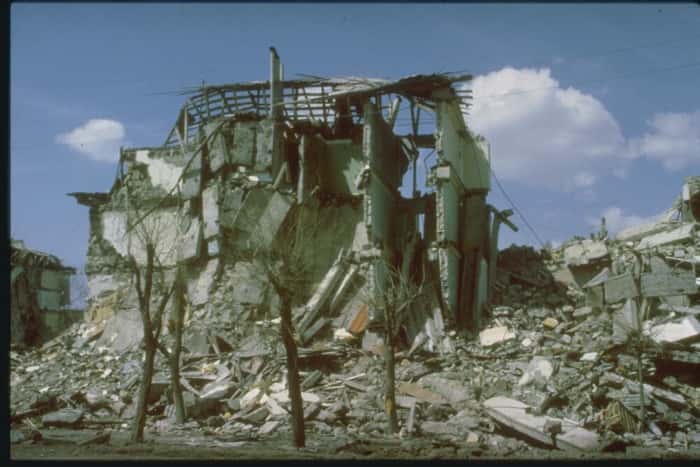
Just three miles outside the Armenian town of Spitak, a devastating 6.9 magnitude earthquake ripped through the earth at 11:41 in the morning on December 7, 1988, unleashing near-total destruction in mere minutes. The seismic force was so immense that it could be felt as far away as Turkey and Iran, wiping out vast swaths of the town and killing thousands. To make matters worse, a second earthquake measuring 5.8 on the Richter scale struck nearby just minutes later, compounding the horror.
The combined toll of both earthquakes was almost incomprehensible: 60,000 people perished, and nearly every structure in the town crumbled into rubble. The quakes tore open an eight-mile-long crack in the ground, stretching several feet wide. What made the devastation so extraordinary was the shallow depth of the epicenters — their proximity to the surface meant that everything above ground experienced far more violent shaking than would typically be expected from quakes of this magnitude.
Compounding the disaster was the widespread use of cheap, substandard construction throughout Spitak. Buildings had been thrown up with shoddy workmanship and inferior materials, making even large structures alarmingly vulnerable to collapse. Heavy stone or brick roofs — common across the town — became deadly hazards as they broke apart and crashed down. The height of many buildings only added to the problem, as taller structures proved far easier for the quakes to topple.
The aftermath brought its own failures. Fear of aftershocks and a general lack of preparedness kept response teams from entering the town for far too long after the earthquake struck. Making things even worse, authorities ordered all foreigners out of the city — including foreign relief workers — which further delayed the delivery of desperately needed aid.
Spitak has since been rebuilt and repopulated, with hard lessons from 1988 driving major changes in how construction is approached. Earthquake-resistant designs became the priority, with reinforced concrete and steel replacing the materials that had failed so catastrophically. Authorities also imposed height limits on all buildings, a measure designed to keep structures stable when the next seismic event inevitably arrives.