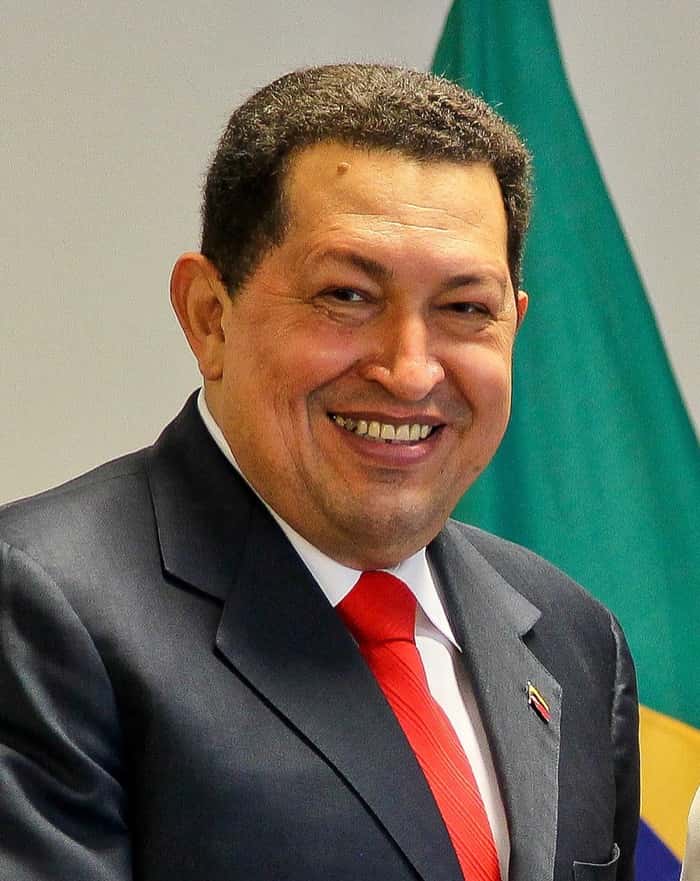
On December 6, 1998, Venezuela's political landscape shifted dramatically when Hugo Chávez — a former military officer who had become a passionate voice for the country's poor — won the presidency through democratic elections. The moment was truly historic: Chávez came to power promising sweeping reforms aimed at lifting up Venezuela's most disadvantaged citizens, ushering in what he called the 'Bolivarian Revolution.' This movement drew its inspiration from Simón Bolívar, the celebrated champion of Latin American independence.
What made Chávez so appealing to voters? Millions of Venezuelans had spent years feeling shut out by the political establishment, and his fierce opposition to the status quo — combined with a deep dedication to fighting poverty and rooting out corruption — resonated powerfully with those who felt forgotten. Once in office, he pushed through dramatic social and economic reforms while steering Venezuela into a firmly anti-U.S. posture, fundamentally altering the political dynamics across Latin America.
Fun Facts:
- Long before entering the political arena, Chávez was an army paratrooper who staged a failed coup attempt in 1992. Rather than destroying his reputation, this bold move turned him into a folk hero among Venezuelans disillusioned with rampant government corruption.
- The name behind his political movement — the "Bolivarian Revolution" — paid homage to Simón Bolívar, the iconic figure who led the fight to free Latin America from colonial rule in the 1830s.
- With his magnetic personality and populist agenda — promising better healthcare, expanded education, and stronger welfare programs — Chávez built an intensely loyal base among working-class Venezuelans. His deep focus on the everyday struggles of ordinary people made him feel like a leader who genuinely understood and cared about their lives.
- One of his very first major moves after taking office was pushing for an entirely new constitution. The result was the 1999 Bolivarian Constitution, designed to expand social welfare programs and concentrate greater authority in the hands of the president.
- Chávez's approach to governance — defined by his drive to foster regional solidarity and reduce dependence on U.S. influence — sparked a broader leftist movement across Latin America. His example gave rise to fresh optimism about an era of greater regional cooperation and self-determination.