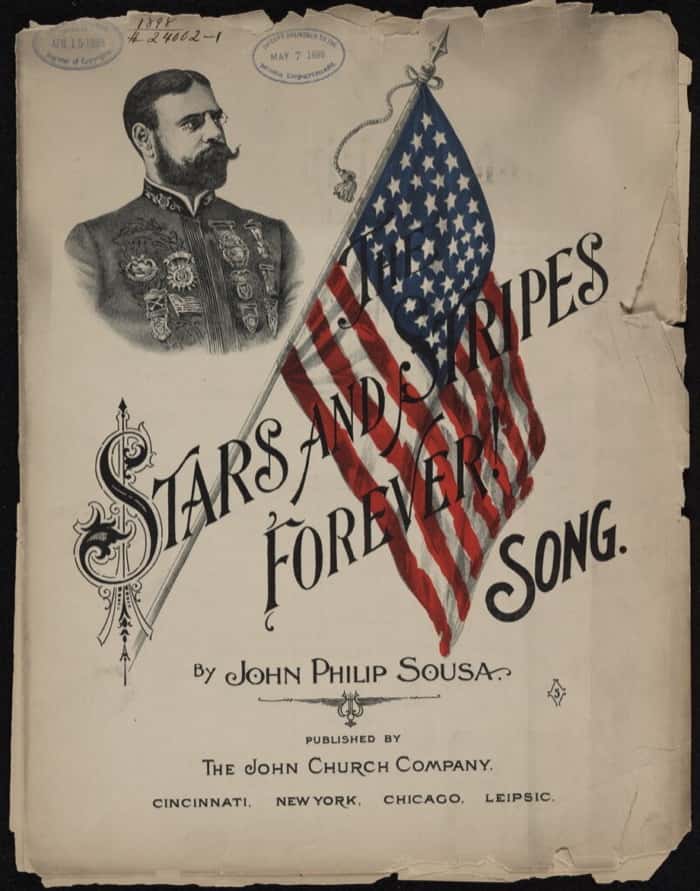
What better way to celebrate Christmas than with the birth of America's most iconic march? On Christmas Day in 1896, John Philip Sousa unveiled "Stars and Stripes Forever" for the first time — a piece that would go on to earn the distinction of being the most famous march in the nation's history. Sousa, who had already earned the nickname "March King," crafted this legendary work during his return voyage from Europe, a trip shadowed by the news of his manager's death. From its very first performance, the march captivated audiences, and it has remained inseparable from American patriotism ever since. Whether blaring through parade routes or punctuating Fourth of July festivities, its stirring melodies and unabashedly patriotic spirit have secured its place at the heart of American celebration.
Fun Facts:
- A Christmas Creation: Homesickness and deep affection for his homeland inspired Sousa as he composed the piece aboard a steamship. He later said the melody revealed itself to him over the course of the entire voyage — a testament to his extraordinary compositional genius.
- Official Recognition: In 1987, Congress bestowed a rare honor upon "Stars and Stripes Forever," designating it the official National March of the United States.
- Distinctive Piccolo Solo: Perhaps the most memorable moment in the entire march is its spirited piccolo solo, which has become a signature hallmark of every performance.
- A Sousa Signature: With this single composition, Sousa firmly established himself as America's foremost composer of military and patriotic music, cementing a legacy that endures to this day.
- A Fourth of July Favorite: Here's an irony worth noting: despite making its debut on Christmas, the march is now most closely linked with Independence Day celebrations across the country.
- Adapted for Films and Cartoons: Hollywood and the animation world have embraced the march wholeheartedly — it has shown up in countless movies and animated shows, frequently serving as a shorthand for Americana.
- International Fame: Though the march is quintessentially American in character, its appeal knows no borders. Military and concert bands around the world perform and cherish it.