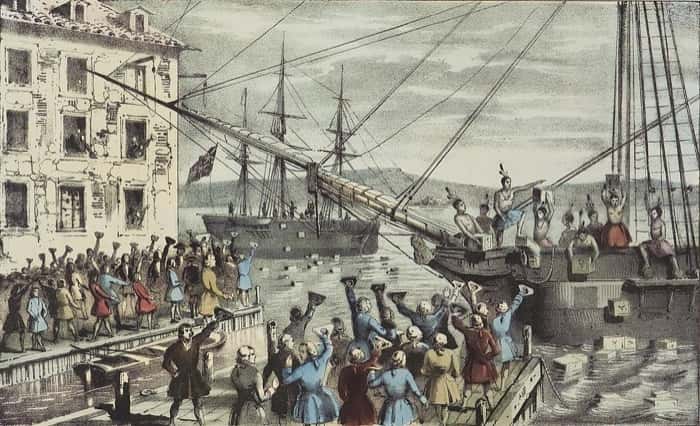
Among the most iconic moments of the American Revolution, the events that unfolded on the evening of December 16, 1773, in Boston Harbor would leave a lasting mark on history. What became known as the Boston Tea Party stood as a powerful act of defiance — a decisive rejection by American colonists of the policies Britain continued to force upon them.
At the heart of the conflict lay the Tea Act of 1773. This piece of legislation from the British government handed the British East India Company a direct selling license, allowing it to offer tea to the colonists at lower costs. On its surface, the law seemed beneficial, yet it carried a cost the colonials viewed as unlawful. A distant government was making decisions for them, and they had no representation whatsoever in the UK Parliament — a situation they found deeply unjust.
The Sons of Liberty decided they would not stand idle. Disguising themselves as Mohawk Native Americans so their identities would remain hidden, they made their way onto three British ships anchored in Boston Harbor. Over the course of the entire night, they hurled 342 chests of tea into the water below. The scale was staggering — the East India Company suffered a massive financial blow, and the message sent to British authority could not have been louder.
Throughout those long hours, the colonists carried out their work with remarkable speed and discipline. Their goal was singular: destroy every bit of tea they could reach while leaving the ships and surrounding property completely unharmed. Teams of men coordinated with precision, organizing and executing each step of the plan deliberately. What emerged was both a striking symbol of defiance and a powerful display of collective unity.
Yet the Boston Tea Party did not yield the results one might expect. Far from easing tensions, it drove them sharply higher. Massachusetts bore the brunt of Britain's punitive response as the government moved to reassert control, but this only served to strengthen the colonists' solidarity and deepen their resistance.
Ultimately, this wasn't a story about tea or even taxes. It revealed a people profoundly committed to reshaping their future — determined beyond measure, regardless of the cost. The Boston Tea Party stands as proof that revolution has to begin somewhere, sparked by immediate action, no matter how fierce the opposition may be.