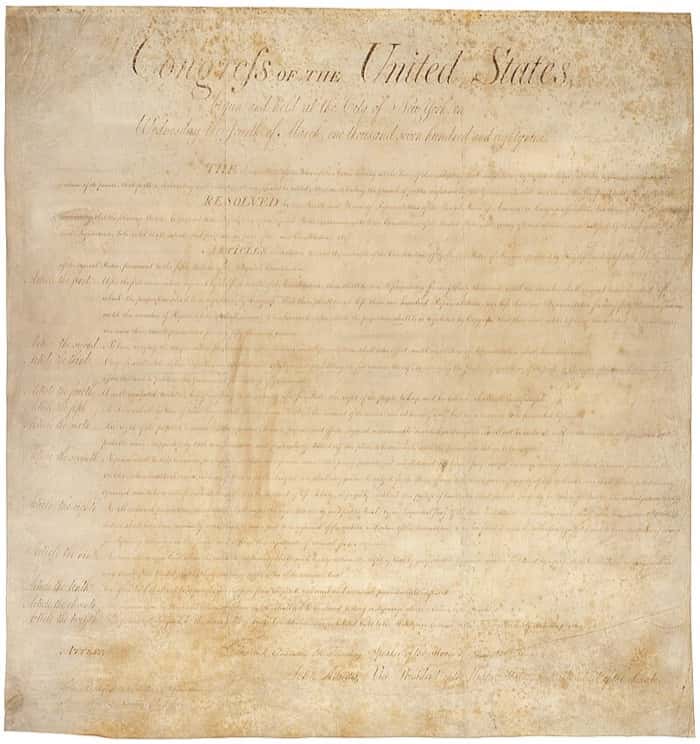
The freedoms that Americans hold dear today didn't appear out of thin air — they were hard-won and formally enshrined through a landmark moment in history. That moment arrived on December 15, 1791, when the Bill of Rights was officially ratified.
Back in 1787, when the U.S. Constitution was first drafted, not everyone was on board with the final product. A widespread belief existed among Americans that the newly established government wielded too much power, raising fears that individual civil liberties could be trampled. People demanded concrete guarantees that their fundamental rights would remain secure.
Enter James Madison, commonly called the 'Father of the Constitution,' who stepped up to tackle these deep-seated worries head-on. To ease public anxiety and rally support for the government, he authored what became known as the Bill of Rights — the first ten amendments to the Constitution. Covering everything from free speech protections to safeguards against unreasonable search and seizure, these amendments were carefully crafted to shield the most essential rights and freedoms of the people.
Getting there, though, was far from quick. Congress first needed to ratify the amendments in 1789. After that came the requirement that three-fourths of the states give their approval — a milestone finally reached on December 15, 1791. With its passage that day, the Bill of Rights became law, serving as a powerful check on government authority and a formal defense of personal rights and liberties.
Beyond simply protecting freedoms, the Bill of Rights wove itself into the very fabric of America's identity. Its place within the Constitution cemented the nation's founding principles of liberty and justice. Over the centuries, it has shaped innumerable court decisions, fueled movements for civil rights, and provided a blueprint that democracies around the world have looked to — a legacy that continues to inspire pride in our nation's history and its far-reaching global influence.
Every year on December 15, we observe Bill of Rights Day — a meaningful occasion to appreciate the liberties we so easily take for granted and to pay tribute to those who sacrificed everything to make them a reality. So the next time you speak your mind freely, insist on a fair trial, or simply enjoy your right to privacy, pause and think about what happened on that pivotal day in 1791. It was the day certain inalienable rights were granted to us all, ensuring that America would fulfill its enduring promise of freedom.