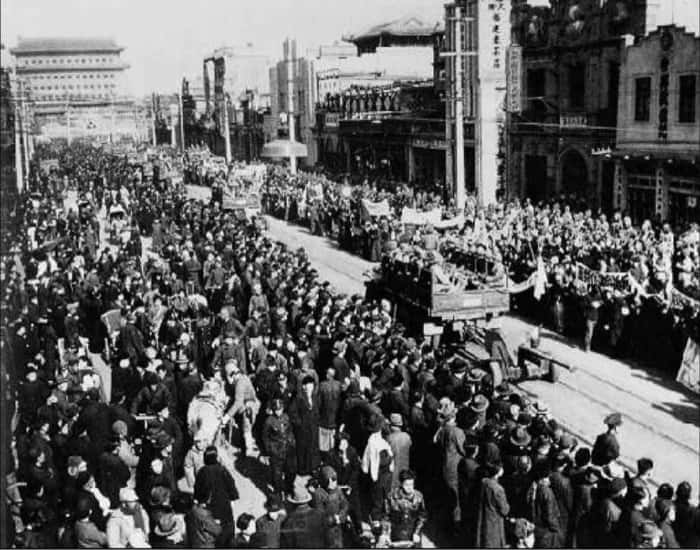
The events of April 12, 1927, plunged the eastern city of Shanghai into chaos as a violent crackdown unfolded — an episode now remembered as the Shanghai massacre and widely regarded as the spark that ignited the Chinese Civil War. Referred to alternatively as the April 12 "Purge" or "Incident," the bloodshed was carried out by forces loyal to General Chiang Kai-shek and the Chinese Nationalist Party, who turned their weapons against leftist groups and organizations throughout the city. Members and associates of the Chinese Communist Party bore the brunt of this targeted campaign of suppression.
In the wake of the initial violence in Shanghai, conservative-aligned forces replicated these brutal tactics in additional urban centers, notably Guangzhou and Changsha. The reason the Shanghai massacre is frequently called the April 12 Purge lies in the underlying objective: Kai-shek and those under his command sought to systematically remove communists from every seat of leadership and authority, with the ultimate goal of crushing the communist movement entirely.
The repercussions of the assaults in Shanghai, Guangzhou, and Changsha rippled through the conservative Chinese Nationalist Party itself, producing a deep ideological fracture. The party splintered into left and right-wing camps, with Kai-chek positioning himself at the helm of the right-wing faction and establishing his base of operations in the city of Nanjing. Meanwhile, the left-wing contingent, under the leadership of politician Wang Jingwei, made Wuhan its headquarters.
Even under the looming specter of continued violence and public beheadings, members of the Chinese Communist Party refused to back down and kept organizing. Their persistence culminated in the Guangzhou Uprising in December of 1927 — the very same year the Shanghai massacre had taken place. Yet this revolt met a similarly grim fate, as government forces overwhelmed those who had rallied behind the communist cause, and the uprising was crushed through sheer force. Nevertheless, the brutality of these events had an unintended consequence: rather than extinguishing resistance, it galvanized communists across other cities and fueled a wave of political action that spread throughout the country.