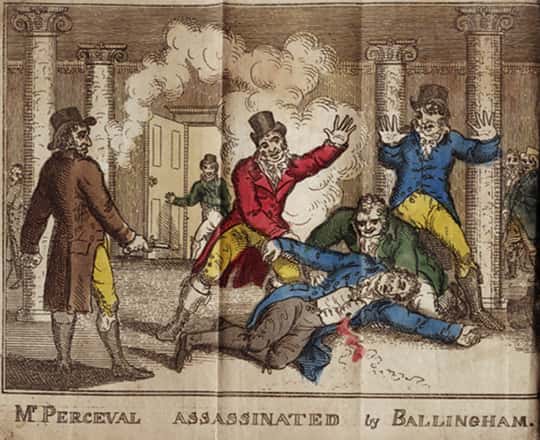
On May 11, 1812, a man sitting quietly by the fireplace in the lobby of the House of Commons stood up as British Prime Minister Spencer Perceval walked in to attend a debate. Without uttering a single word, the man pulled out a pistol and shot the Prime Minister dead on the spot. Then, remarkably, he simply sat back down and waited calmly for authorities to take him into custody. Given that Perceval had never been particularly well-liked as prime minister, immediate fears spread that the killing might signal the beginning of a broader insurrection. The reality, though, turned out to be far less dramatic.
During his time leading the British government, Perceval had been navigating one of the most critical stretches of the long-running Napoleonic Wars, committed to defeating France regardless of the price. To that end, he had channeled the full force of Britain's industrial and economic power into the war effort — a strategy that left widespread poverty and suffering in its wake. His policies had caused so much damage that news of his death was actually met with celebration across the country. Naturally, most assumed the assassination was politically motivated and tied to this deep public resentment. As it turned out, though, the killer was simply a disgruntled merchant whose mental stability was very much in question.
That merchant was John Bellingham, a Liverpool businessman who had racked up considerable debt while operating in Russia — debt he insisted he didn't legitimately owe. The dispute had landed him in a Russian prison, and he became convinced that the British government owed him compensation for the financial losses he'd suffered. The government, however, saw no reason to reimburse him for what it considered his own personal business failures. After years of futile attempts to recover what he believed was rightfully his money, Bellingham concluded that assassinating the Prime Minister was the only path to getting his grievances before a court. Ironically, the only case that ended up being heard was his own murder trial. Proceedings took place on May 15, lasting a mere 8 hours in total — and that included the just 15 minutes the jury needed to reach its verdict. By May 18, exactly one week after the assassination, Bellingham had been executed.