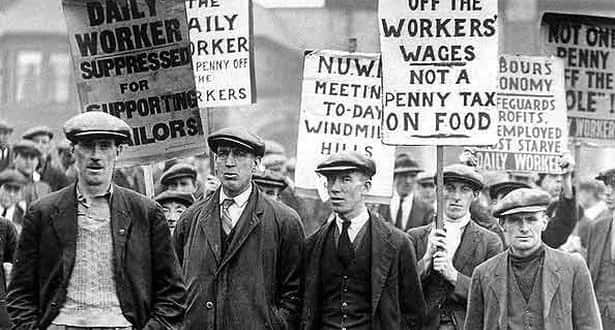
The British coal industry found itself in dire straits in the aftermath of World War One. Wartime had driven enormous demand for coal, but once the conflict ended, that demand dropped off dramatically. Compounding the problem, other countries had begun upgrading and modernizing their mining operations, while Britain had neglected to do the same — leaving its coal sector increasingly unable to compete. On top of all this, the Dawes Plan, designed to stabilize post-war Germany's economy, enabled Germany to flood the European market with coal at rock-bottom prices, further undermining British competitiveness. All of these pressures converged until, on May 3, 1926, the Trade Union Congress took the dramatic step of calling a general strike.
The crisis had its roots with the coal miners themselves. Worker protections were scarce in those times, leaving miners with precious few options when coal mine owners began making extreme and reckless decisions to preserve their profit margins. Wages, already meager, were slashed to truly unlivable levels. On top of that, miners were expected to put in longer hours for this reduced pay, and investment in workplace safety was so negligible that preventable accidents were killing miners at an alarming rate. With no other avenue available to them, the miners walked off the job.
In solidarity with the miners, the Trade Union Congress escalated matters by calling for a general strike. What became known as the General Strike drew in dock workers, printers, railway workers, other transportation industry workers, and workers in the iron and steel industries.
The widespread disruption prompted government intervention — but not on behalf of the workers. Instead, authorities sided with the coal mine owners. The Prime Minister denounced the strike as "the road to anarchy and ruin." The press painted the action as subversive and revolutionary, turning a blind eye entirely to the legitimate grievances the miners had raised. Military personnel were deployed to fill the roles vacated by striking workers. Ultimately, the strikers faced an impossible choice: give in or go hungry. Those who returned to work were met with demotions, severe pay cuts, and demands for longer hours. The consequences rippled through generations, condemning workers and their families to poverty.