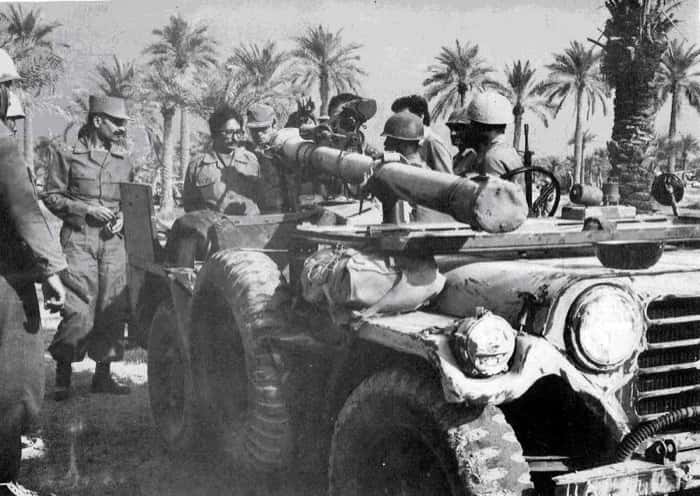
Lasting eight grueling years from 1980 to 1988, the Iran-Iraq War — sometimes referred to as the First Gulf War — stands as one of the most consequential conflicts in Middle Eastern history. The roots of the war lay in Iraq's decision to invade Iran, a calculated effort to capitalize on the turmoil following Iran's revolution, tap into the country's vast resources, and assert dominance over the Shatt al-Arab River. A UN-brokered ceasefire finally brought hostilities to a close on August 8th, 1988. Neither side could claim a decisive victory, though Iraq walked away having established itself as a significant military power in the region.
Facts:
- The First Gulf War is another name by which the Iran-Iraq war is commonly known.
- Fighting began in September 1980 and lasted until August 8th, 1988.
- The conflict erupted when Iraqi forces launched a major invasion of Iran, setting off years of devastating warfare.
- After eight years of relentless bloodshed, a turning point arrived when both nations agreed to accept United Nations Security Council Resolution 598, officially bringing the war to an end.
- Among the driving factors behind the conflict was Iraq's ambition to supplant Iran as the dominant power in the Persian region.
- The human toll was staggering: over 100,000 civilians perished during the war, while approximately 600,000 military personnel from both sides were killed.
- It is believed that Iran suffered the heaviest casualties of the two nations.
- Experts believe the combined economic losses for both countries exceeded 1 trillion dollars.
- Iraq benefited from considerable financial and military backing provided by a broad coalition that included the United States, the United Kingdom, France, the Soviet Union, Italy, and Yugoslavia. Iran, on the other hand, did not enjoy comparable levels of support but nonetheless received assistance from China, North Korea, Syria, Libya, Israel, Pakistan, and South Yemen.
- Though Iran's external support paled in comparison to what Iraq received, it still secured aid from China, North Korea, Syria, Libya, Israel, Pakistan, and South Yemen.
What made this war especially harrowing was the nature of the combat itself. Both sides resorted to savage tactics that echoed the horrors of World War I — trench warfare, barbed wire fortifications, and the use of chemical weapons along with other weapons of mass destruction. These methods serve as a stark reminder of just how extreme and brutal the conflict truly was.