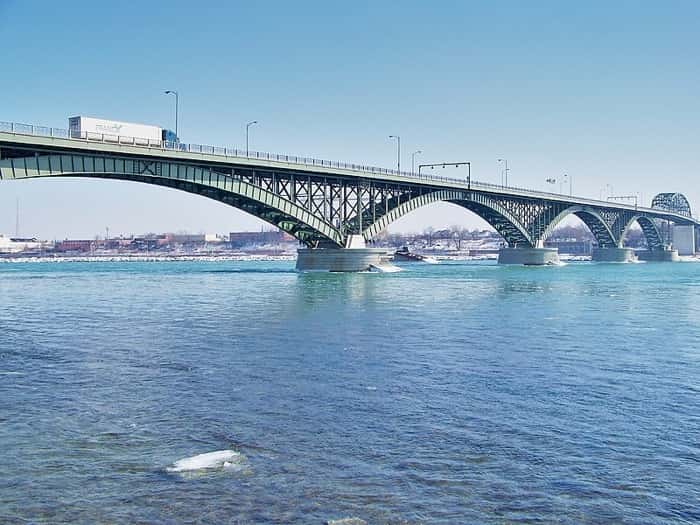
On August 7, 1927, two nations came together to honor something remarkable—a full century of peaceful coexistence between the United States and Canada. But this wasn't just an anniversary celebration. It was also the day the Peace Bridge officially opened its doors (or rather, its lanes) to the public, stretching across the Niagara River to link Buffalo, New York, with Fort Erie, Ontario. Far more than an engineering achievement of steel and concrete, the bridge stood as a powerful emblem of friendship and shared purpose, attracting what would become one of the biggest gatherings the area had ever seen.
Here's How it Unfolded
- 100,000 people gathered at the American end for the dedication. Flags waved, bands played, and speeches rang out. Dignitaries from across the globe attended, including the Prince of Wales (later King Edward VIII), Prince George, British Prime Minister Stanley Baldwin, and U.S. Vice President Charles Dawes.
- The message was clear: peace. The bridge commemorates over a century of harmony between Canada and the United States since the end of the War of 1812. The Prince of Wales captured the moment best when he said, "May this bridge be… symbolic of the maintenance of their friendly contacts by those who live on both sides of this frontier."
Why a Bridge?
It all came down to practical need. The International Railway Bridge, constructed back in 1873, simply wasn't built for the demands of the modern era. With automobile traffic surging and cross-border trade expanding rapidly in the early 20th century, a replacement became unavoidable. That didn't make the job easy, though. The Niagara River's swift currents—racing at speeds of up to 12 miles per hour—posed a formidable obstacle. Under the leadership of engineer Edward Lupfer, however, the team pushed through. Work got underway in 1925, and remarkably, the entire project wrapped up by the spring of 1927.
And the structure? A marvel:
- The structure features five arched spans that cross over the river.
- A total length of 5,800 feet.
- Built with over 9,000 tons of steel and 800 tons of reinforcing bars.
Lupfer himself had the honor of driving the very first car across the bridge on March 13, 1927, well ahead of the formal ceremony. Yet it was August 7 that truly brought the bridge to life—transforming it from a feat of construction into something with deeper meaning and lasting purpose.
Since its inauguration, the Peace Bridge has grown into one of North America's most vital commercial corridors, carrying thousands of trucks and travelers across the border each day.