In the midst of the American Revolution—while the fledgling nation struggled to secure its independence—George Washington took a remarkable step. From his headquarters in Newburgh, New York, General Washington created the Badge of Military Merit on August 7, 1782. Fashioned from purple silk in the shape of a heart and trimmed with silver edging, the badge bore just one word: "Merit." Its purpose was to recognize the overlooked heroes serving in the Continental Army—soldiers who demonstrated exceptional service, no matter their rank or position of command.
Morale across the army was waning, and Washington knew it. Hard-fought victories, dwindling supplies, and years of service without acknowledgment had taken their toll. For the men who received it, this badge served as a rare and deeply meaningful testament to their sacrifice—something that transcended mere glory or decoration. Only three soldiers ever earned this distinction: Elijah Churchill, William Brown, and Daniel Bissell Jr. Their names were entered into a "Book of Merit," a document that has sadly been lost to history, making them the sole documented recipients of the original badge. After that, the award quietly slipped into obscurity.
Nearly 150 years would pass before the Purple Heart found new life. General Douglas MacArthur championed its revival in 1932, timed to coincide with the 200th anniversary of George Washington's birth. Drawing inspiration from Washington's original design, the modern Purple Heart was born—now rendered in metal and bearing the general's profile and coat of arms. The criteria for earning it, however, had shifted as well.
The New Purple Heart
Rather than recognizing "meritorious action," the reimagined award was dedicated to those wounded or killed in combat. As the years passed, it grew into one of the most deeply respected symbols of military sacrifice.
- World War II alone saw over 1 million Purple Hearts awarded. It stood as a tribute to the blood spilled for freedom, from the beaches of Normandy to the Pacific islands.
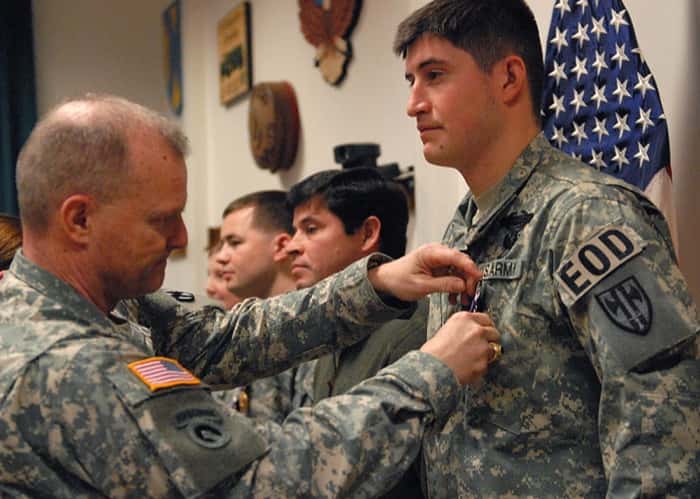
- It's still awarded today. Soldiers injured by enemy action in places like Iraq and Afghanistan continue to receive it. It remains the oldest active military decoration in U.S. history.
A small, hand-stitched purple badge has transformed over the centuries into a sacred emblem—one that carries with it stories of bravery, pain, and patriotism. Though George Washington never lived to see the medal that now bears his image, the vision he set in motion endures still.