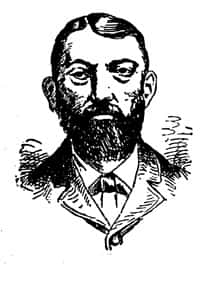
On August 6, 1890, the state of New York stepped into uncharted territory — it would become the first state to carry out an execution using the electric chair. And William Kemmler, the man strapped into that chair, would earn a grim distinction as the first person ever put to death by this method.
Kemmler made his living as a vegetable peddler in Buffalo, New York, and had gained a reputation as a heavy drinker, earning him the nickname "Philadelphia Billy." On March 29, 1889, still shaking off the effects of the previous day's hangover, he found himself embroiled in a violent domestic dispute with his then-girlfriend, Tille Ziegler. The confrontation erupted after Kemmler accused her of scheming to steal his money and run off with another man. Rage overtook him — he stormed out to the barn, grabbed a hatchet, and murdered his common-law wife in cold blood. In a chilling aftermath, he strolled over to a neighbor's house and calmly announced what he had done.
New York's justice system wasted no time. The murder trial moved swiftly, ending with a conviction of 1st-degree murder. Just three days later, on May 10th, Kemmler received his death sentence: execution by electrocution in the electric chair, which had already been set up and waiting at Auburn State Prison.
When the fateful morning of August 6th, 1890, arrived, Kemmler was roused at 5:00 am. He dressed in a suit, white shirt, and a necktie. Following prayers and breakfast, his head was shaved in preparation. At 6:38 am, he was escorted into the electrocution chamber before 17 witnesses. Once seated in the chair, a current of 1000 volts surged through him for 17 seconds — a duration previously calculated as sufficient to render him unconscious and deliver a swift, painless death. But when the power was cut, signs of mortality were still visible, rendering the first attempt nearly a failure. The attending physicians urgently called for the current to be restored, this time at 2000 volts, which finally proved lethal. All told, the execution dragged on for about 8 minutes.
Those who watched described the chamber filling with the odor of burning flesh. The scene proved too much for 2 of the eyewitnesses, who fainted from the sight and smell alone. Many others were left shaken and revolted, and multiple newspapers branded the event a "historic bungle" that was "sickening, disgusting, and inhuman."