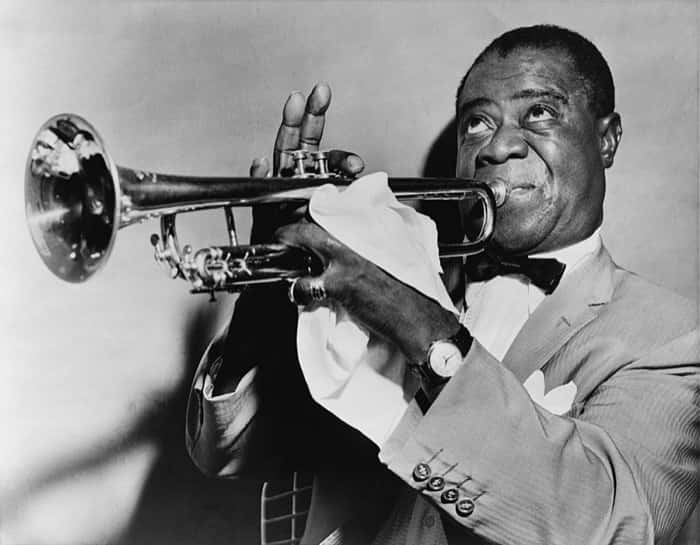
Growing up in the tough neighborhoods of New Orleans, Louis Armstrong entered the world on August 4, 1901, and knew hardship from the very start. Yet music called to him early and never let go. So deep was his devotion that he left school behind to take on work, spending his very first earnings on a cornet — a powerful sign of the passion that would carry him to legendary status as one of the most celebrated jazz musicians the world has ever known.
Resilience and sheer determination define the story of Louis Armstrong. With nothing more than a fifth-grade education and the humblest of beginnings, he climbed his way to the pinnacle of the musical world. His remarkable journey stands as a vivid reminder of just how far unwavering resolve can take a person — and it continues to inspire to this day.
Fun Facts
- Born Louis Daniel Armstrong on August 4, 1901, in New Orleans, Louisiana, he was raised in New Orleans by his mother, Mayann.
- It wasn't simply his mastery of the cornet and trumpet that made Armstrong famous — it was the seismic impact he had on the jazz industry. His distinctive blend of virtuosity and innovation turned him into an overnight sensation, and his influence still reverberates throughout the music world today.
- He looked up to Joe King as his mentor, eventually following the star all the way to Chicago to perform in the Creole Jazz Band.
- Among Armstrong's most iconic songs are What a Wonderful World and La Vie en Rose.
- Over his career, Armstrong earned multiple accolades, including a Grammy for Best Male Vocal Performance in 1965. This award was for the Hello, Dolly!
- Armstrong died on July 6, 1971, at 69, in New York City. His final resting place is Flushing Cemetery.
- In 1972, he was honored posthumously with the Grammy Lifetime Achievement Award.
- His induction into the National Rhythm & Blues Hall of Fame came in 2017.