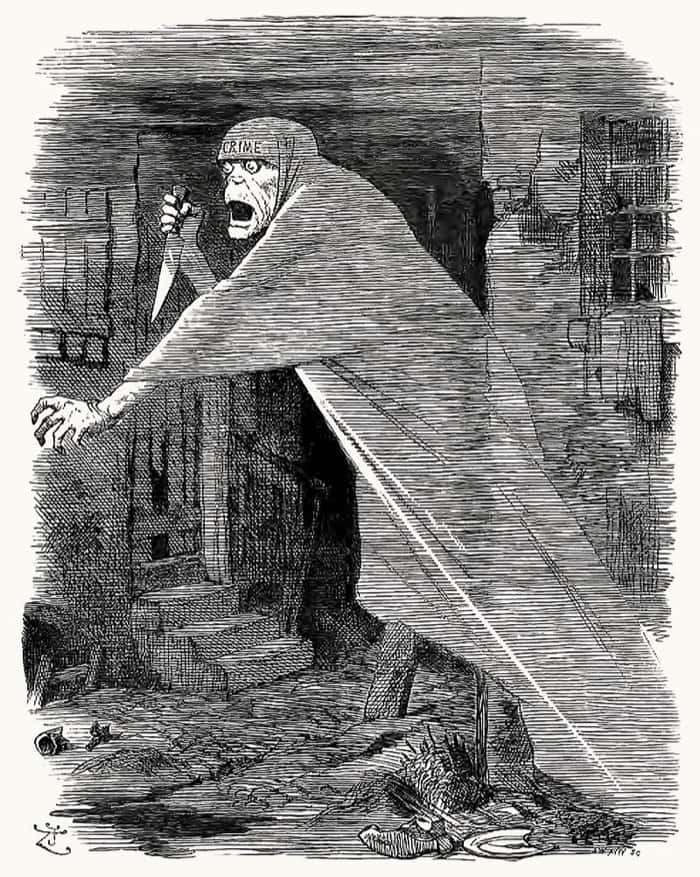
In the early hours of August 31, 1888, a grim discovery in Whitechapel, London would set off one of history's most infamous crime sagas. The lifeless body of Mary Ann "Polly" Nichols lay in Buck's Row, and her brutal killing would come to be recognized as the opening act of "Jack the Ripper's" murderous campaign. Victorian society was consumed by a potent mix of horror and fascination—a reaction that persists among historians, criminologists, and curious minds to this day.
The Discovery in Buck's Row
Charles Cross, a cart driver making his way through the predawn darkness, stumbled upon Nichols' body in Buck's Row (now Durward Street) at approximately 3:40 a.m. Her throat had been viciously cut and her abdomen bore signs of savage mutilation. Constable John Neil responded promptly to the scene and confirmed that she was dead. Nichols was 43 years old and had long battled poverty and alcoholism—circumstances that were far from unusual among those living in London's East End. In a district defined by crime, overcrowding, and desperation, she was one of many women left dangerously vulnerable.
The Beginning of a Killing Spree
While Nichols' killing sent shockwaves through the community, it turned out to be merely the opening chapter of a horrific pattern. Over the following weeks, Annie Chapman, Elizabeth Stride, Catherine Eddowes, and Mary Jane Kelly all fell victim to strikingly similar attacks. The savage nature of these crimes—characterized by deep throat cuts and abdominal mutilations—pointed to a perpetrator with anatomical knowledge, sparking theories that he may have been a butcher, surgeon, or medical student.
Media outlets latched onto the story with fervor, and before long, the elusive killer acquired a bone-chilling moniker: "Jack the Ripper." Police stations and newspapers were inundated with letters—some believed to be genuine, though many were likely hoaxes—that mocked investigators and deepened the public's dread.
Investigative Challenges
A massive investigation was mounted by the Metropolitan Police, who interviewed hundreds of individuals and chased down countless leads. Yet for all their work, the killer remained one step ahead. Victorian-era policing was severely constrained by the absence of forensic science, modern profiling techniques, and fundamental crime scene analysis, forcing detectives to lean heavily on speculation rather than concrete evidence.
The Ripper murders also threw a harsh spotlight on the glaring divide between London's poverty-stricken East End and its more affluent districts. Newspapers didn't just sensationalize the killings to boost sales—they also used the coverage to draw attention to the wretched conditions endured by the poor. What had begun as a criminal investigation evolved into a powerful symbol of social neglect, attracting an enormous amount of public attention in the process.
A Legacy of Fear and Mystery
The killing of Mary Ann Nichols was only the start of the Ripper saga. What could have been dismissed as yet another tragedy in a perilous neighborhood instead became the first installment of a series that would seize the world's attention. To this day, the case has never been solved, and theories about the killer's identity span a remarkable range—from local tradesmen to members of the aristocracy.
More than 135 years on, Jack the Ripper endures as one of history's most captivating unsolved mysteries.