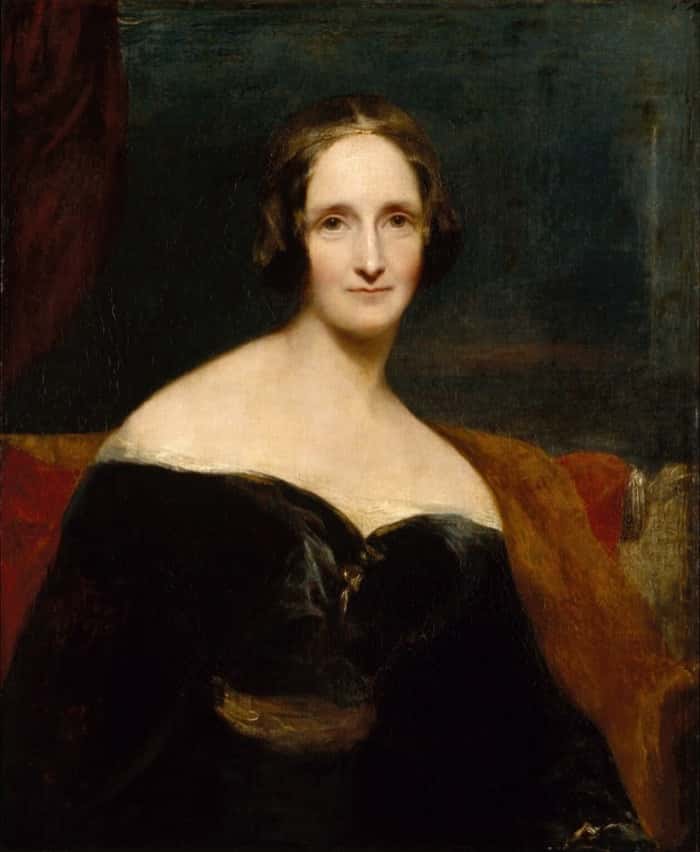
A waking dream visited a young woman on a stormy night in 1816. She saw a pale scientist kneeling over a creature he had assembled, desperate to coax it into existence. Literature would never be the same after that vision. Yet the woman who dreamed up the monster—Mary Shelley—had already been living a life dramatic enough to rival any Gothic tale.
How It Began
London witnessed the arrival of Mary Wollstonecraft Godwin on August 30, 1797, and her family tree practically guaranteed a remarkable future. Her mother, Mary Wollstonecraft, had blazed trails as a feminist thinker, celebrated above all for A Vindication of the Rights of Woman. Meanwhile, her father, William Godwin, made his mark as a radical political philosopher. Revolutionary ideas were the very atmosphere of Mary's upbringing—crackling through the household like electricity.
Heartbreak, however, arrived early. Mary's mother passed away just days after the birth, leaving her to be raised by her father and, eventually, a stepmother she deeply resented. Even so, her intellectual formation was extraordinary—she counted Samuel Taylor Coleridge and Aaron Burr among her tutors. From the very beginning, books, bold ideas, and radical thought were the forces that shaped her.
Enter Percy Bysshe Shelley—a married poet drawn to her father's political philosophy. Mary was captivated, completely. She was only 16 when the two ran away together to France, leaving polite society aghast. Their adventure was broke and disordered, yet it was the crucible in which her literary voice took form. Sorrow haunted her early life alongside Percy—they lost multiple children at young ages, and tragedy lurked perpetually nearby.
The summer of 1816 found Mary, Percy, and her stepsister Claire Clairmont visiting Lord Byron in Switzerland. The weather turned dreary and frigid during what became the infamous "Year Without a Summer." Confined indoors, Byron challenged the group to each compose a ghost story. From Mary's imagination emerged Frankenstein; or, The Modern Prometheus—an exploration of ambition, creation, and consequence. When it reached readers in 1818, it detonated like a literary bombshell: simultaneously horror, science fiction, and something entirely new.
Relief from hardship never came, though. Percy drowned off the coast of Italy in 1822, and Mary found herself a widow at just 24. She made her way back to England with their only surviving child and devoted the remainder of her days to the written word—producing historical novels such as Valperga, dystopian fiction like The Last Man, and carefully curating Percy's literary legacy. Illness, grief, and the harsh judgments of society dogged her constantly, but her dedication to her craft never wavered.
When Mary Shelley died in 1851, she left behind an influence that has proven immortal. Frankenstein transcended its origins as a novel, igniting debates about science, ethics, and what it means to be human—debates that rage on to this day.
Why She Still Matters
- She pioneered science fiction before the term was even coined.
- She challenged the boundaries of gender, art, and morality.
- She wrote from experience—loss, love, betrayal, and brilliance.
Reducing Mary Shelley to simply the author of Frankenstein doesn't begin to capture her. She was a rebel, a visionary, and a writer whose own life story practically demands a novel of its own.