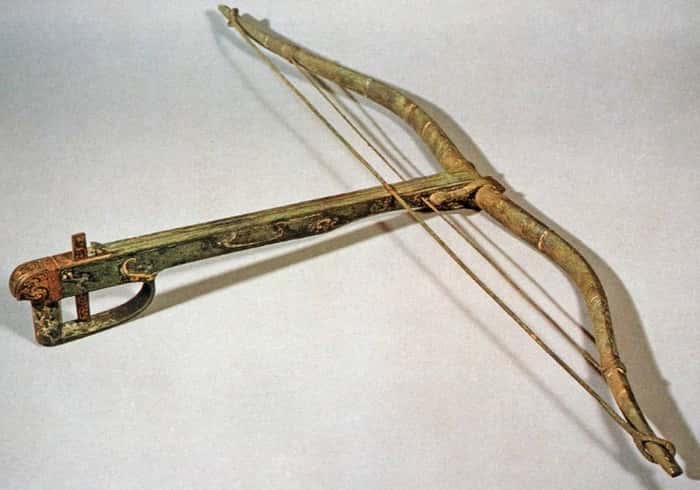
A landmark decision unfolded on August 30, 1146, when European leaders took the extraordinary step of banning the crossbow. At the heart of this decree stood Pope Innocent II, one of medieval Europe's most influential figures, who helped drive through this contentious ruling. The motivations behind the ban were a complex web of political, social, and military considerations — a vivid reflection of how warfare was transforming across the medieval world.
Fun facts:
- The Crossbow's Impact: Few weapons reshaped the medieval battlefield quite like the crossbow. This powerful ranged weapon could punch through armor with devastating effect, fundamentally changing how wars were fought. What made it especially disruptive was its accessibility: while mastering the traditional longbow required years of dedicated practice, a crossbow could be used with deadly efficiency by soldiers with minimal training, upending established power dynamics in combat.
- Preserving Chivalric Warfare: For the aristocracy in particular, the crossbow represented a serious threat to the chivalric combat code — a framework built on the skill, valor, and honor of knights. The weapon's great equalizing power meant that common, lightly trained soldiers could bring down heavily armored knights with relative ease, and this deeply troubled European leaders who valued the old martial traditions.
- The Council of Clermont, a significant gathering of European leaders, served as the formal venue where this crossbow ban was officially established. At this council, the assembled leaders worked to safeguard the interests of the nobility and uphold time-honored martial values. By issuing this decree, they sought to keep warfare firmly within the domain of the knightly class and guard against the breakdown of the existing social and military hierarchy.
- The Aftermath: In practice, the ban proved far more symbolic than enforceable. The crossbow continued to appear across numerous European conflicts despite the decree. This gap between intent and reality perfectly captured the ongoing friction between advancing military technologies and deeply rooted social structures. As time went on, the crossbow maintained its battlefield importance, serving as a powerful example of the delicate dance between innovation and tradition.
- Long-Term Effects: The crossbow prohibition left a lasting mark on the trajectory of warfare and military technology. It highlighted a fundamental struggle that medieval societies grappled with: how to reconcile emerging technological advancements with the desire to maintain long-standing norms and values.
This bold move to outlaw the crossbow stands as a defining moment in medieval history, capturing the inherent friction between progress and tradition. It also serves as a reminder that the evolution of military technology has continuously reshaped how wars are waged and how combat is experienced — a pattern that echoes all the way to the present day.