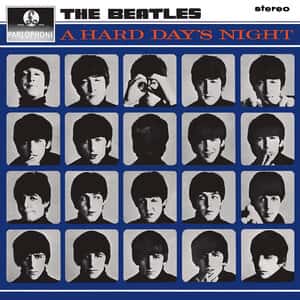
Half a decade after its original release on August 3, 1964, "A Hard Day's Night" climbed back to the pinnacle of the U.S. charts. What made this moment so remarkable? It would be the final time a Beatles single claimed the number one position while all four members were still a functioning band. Far more than just another trip to the top of the charts, this was a farewell disguised as a comeback.
Let's Rewind:
- Back in 1964, "A Hard Day's Night" first arrived as the title track for both a film and an accompanying album.
- That iconic opening jangle—produced by George Harrison's 12-string Rickenbacker—remains a source of fascination and debate among guitarists to this day.
- John Lennon penned the bulk of the track in a single session, lifting the title from one of Ringo's offhand remarks.
- The bridge came courtesy of Paul McCartney, injecting the song with its signature push-and-pull energy.
- Reaching No. 1 in both the UK and the U.S. in '64, the single was fast, punchy, and unforgettable—the very essence of early Beatles magic.
But by August 1969, everything had changed.
The fab foursome were pulling in different directions. Work on "Abbey Road" was already in progress, though tensions quietly boiled behind studio doors. Their manager, Brian Epstein, had been dead for two years. Lennon had thrown himself into activism alongside Yoko Ono. McCartney found himself at odds with the rest over business matters. George Harrison, meanwhile, was producing some of his finest material yet could barely find room for it. And Ringo? He simply wanted everyone to get along.
Then something unexpected happened on the charts.
A re-release campaign, combined with a powerful wave of nostalgia, propelled "A Hard Day's Night" back to the top. Even as the band was walking away from what they'd built, fans held tight to the memories. The song sounded as vital as ever—timeless, perhaps. Yet its return to No. 1 felt less like a triumph and more like a final bow for the Beatles' collective spark.
Why does this matter?
This wasn't merely a song reclaiming the top spot—it was a portal back to Beatlemania, reverberating through a year defined by upheaval. Woodstock loomed just weeks away. The Vietnam War continued to rage. The world was moving at a dizzying pace. And yet, that unmistakable opening chord of "A Hard Day's Night" still possessed the ability to make people stop and listen.
Never again would the Beatles reach the summit of the charts as a group. Their last studio album, Abbey Road, arrived in September. Let It Be wouldn't see release until 1970, after the band had already dissolved. But August 3, 1969, endures as the final moment a Beatles single sat atop the charts while the Fab Four were still, however tenuously, united.