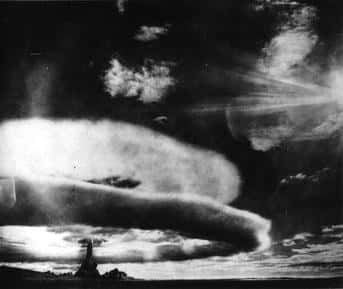
On August 29, 1949, the Soviet Union secretly set off its first nuclear device at a test site located in Kazakhstan. While Stalin and the rest of the Soviet political leadership were understandably thrilled by the successful detonation of their atomic bomb, the event plunged their Western rivals into deep alarm as anxieties about nuclear conflict intensified.
Interesting Facts:
- Under a top-secret initiative known as the Soviet atomic bomb project, the USSR (Union of Soviet Socialist Republics) conducted extensive research aimed at developing nuclear weapons. Launched in the early 1940s, this program proved instrumental in reshaping the global balance of power throughout the Cold War era.
- Before and during the Second World War, Joseph Stalin gave his authorization for the project to move forward.
- Nicknamed First Lightning, the USSR's inaugural atomic bomb stood as a striking demonstration of the extraordinary power that human ingenuity could unleash.
- In their meticulous quest to understand the bomb's effects, Soviet scientists erected structures such as bridges and buildings in the vicinity of the test site to gather accurate data.
- The test itself took place in the remote region of Semipalatinsk, situated in Kazakhstan.
- Beyond the standard structures built nearby, the Soviets also positioned animals, including sheep, close to the blast zone in order to gauge the weapon's impact on living creatures.
- Clocking in at 20 kilotons, the bomb's yield was comparable to that of the first US nuclear explosion carried out by Trinity.
- Just a few weeks afterward, President Harry S. Truman publicly disclosed that the USSR had joined the ranks of nuclear-armed nations. This announcement was tied to the espionage carried out by Klaus Fuchs, a German physicist who had contributed to the Manhattan Project and subsequently funneled vital nuclear bomb secrets to the USSR. Fuchs was eventually arrested, underscoring the serious ethical and security dilemmas surrounding the spread of nuclear weapons technology.
- Determined to preserve its strategic dominance, the United States went on to develop a hydrogen bomb, which is believed to be several times more destructive than an atomic bomb.
- The USSR quickly followed suit, constructing their own hydrogen bomb and detonating it on November 22, 1955.