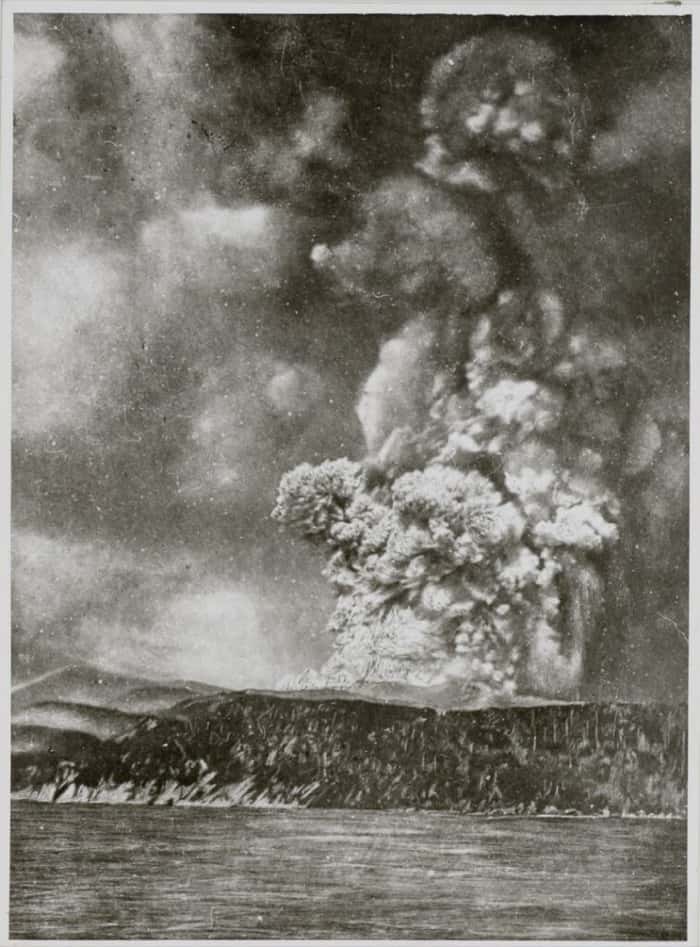
When Krakatoa — a volcanic island situated in the Sunda Strait between Java and Sumatra in Indonesia — violently exploded on August 27, 1883, it did so with a ferocity the modern world had never witnessed. The catastrophic event transformed the surrounding landscape and sent shockwaves through the global climate system.
Interesting Facts:
- While the eruption first got underway on August 26, 1883, it reached its terrifying climax on August 27. The sheer power of the blast carried its sound more than 3,000 miles, with people as far away as Australia and the island of Rodrigues in the Indian Ocean reporting that they could hear it.
- An estimated 20 cubic miles of rock, ash, and pumice were hurled into the sky during the eruption. The volcanic cloud soared to staggering heights of up to 50 miles, throwing atmospheric conditions into disarray and triggering dramatic temperature swings felt around the world.
- Towering tsunamis — some with waves reaching as high as 120 feet — were unleashed by the eruption. Coastal communities ringing the Sunda Strait bore the brunt of this devastation, with over 36,000 people losing their lives. The destruction was staggering, as entire villages were simply erased by the surging waters.
- Massive quantities of ash and sulfur dioxide that poured into the atmosphere triggered what became known as the "year without a summer." These volcanic particles drove global temperatures downward, spawning climate anomalies and severe weather patterns throughout the following year. Across the planet, people experienced what is described as a "volcanic winter," marked by cooler temperatures and bizarre weather conditions.
- Much of Krakatoa Island itself was destroyed in the eruption, collapsing inward to form a caldera that the sea partially filled. This dramatic collapse reshaped the entire region's geography. Remarkably, from this destruction came creation: a new volcanic island called Anak Krakatau started rising from the ocean in 1927 and remains an active volcano to this day.
- Beyond its physical devastation, the Krakatoa eruption ignited a wave of scientific curiosity, driving new research into volcanic activity and its far-reaching global consequences. Its influence extended into the cultural realm as well, leaving a deep imprint on art and literature of the era, with numerous works capturing the event's blend of terror and awe.