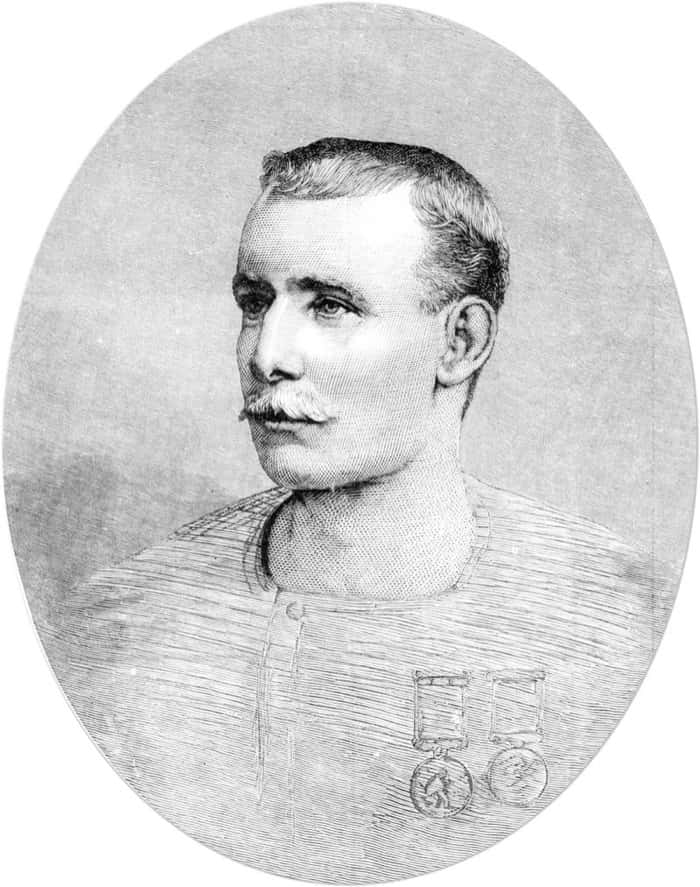
On this day in history, a man clad in a red silk swimsuit accomplished something no one ever had before. On August 24, 1875, Captain Matthew Webb—a 27-year-old merchant navy officer hailing from Shropshire, England—completed the first-ever swim across the English Channel. There was no wetsuit, no goggles, nothing but a coating of porpoise fat for warmth, relentless determination, and the methodical pace of the breaststroke.
Setting off from Dover on August 24, Webb plunged into the frigid waters with France firmly in his sights. On paper, the Channel spans a mere 21 miles—but unpredictable tides, powerful currents, and fickle weather transform it into a gauntlet. When he finally touched shore near Calais, the actual distance he'd covered exceeded 39 miles. The entire ordeal lasted 21 hours and 45 minutes.
He Didn't Do It For Fame—But He Got It Anyway
- The Daily Telegraph proclaimed him "the best-known and most popular man in the world."
- A triumphal arch was built in his hometown.
- London held a banquet in his honor.
- The stock exchange established a testimonial fund in his honor.
The roots of this extraordinary feat stretched back to Webb's childhood. Growing up as one of twelve children, he honed his swimming skills in the River Severn. Speed was never his strong suit—endurance was. He entered the Navy at the age of twelve, where daring rescues and open-water exploits earned him recognition. So when word reached him of someone's failed attempt to conquer the Channel, he didn't see discouragement. He saw an invitation.
Webb's Training
His preparation was grueling—swimming 10 to 20 miles daily and conditioning his body against the cold. A first attempt at crossing the Channel ended in failure, but quitting wasn't in his nature. He bided his time, waited for more favorable tides, and launched a second effort.
That second attempt, on August 24, was brutal:
- He battled cold, jellyfish, and seaweed.
- He fueled up on beef tea, brandy, and coffee passed from escort boats.
- At one point, a tide change pushed him backward just seven miles from France.
- But Webb powered on.
Shortly before 11 a.m. on August 25, he staggered onto the shore near Calais. As he approached the beach, the crew of a passing ship broke into "Rule Britannia." His homecoming in England was nothing short of triumphant. Yet the adulation proved fleeting.
Within a few years, public attention drifted elsewhere. To earn a living, Webb turned to lectures and daring stunts. He spent 60 hours floating in a whale tank and took on other extreme swimming challenges. Then came his final, fateful act in 1883 at Niagara Falls—an attempt to swim the lethal whirlpool churning beneath the Falls. Onlookers watched in horror as the rapids swallowed him whole.
His battered body was recovered five days later.
It was a tragic end—but it could never erase what he had achieved.
Through sheer determination, rigorous training, and raw courage, Webb proved to the world what a single human being could accomplish. His memorial in Dawley, England, carries an inscription that says it all:
"Nothing Great Is Easy."