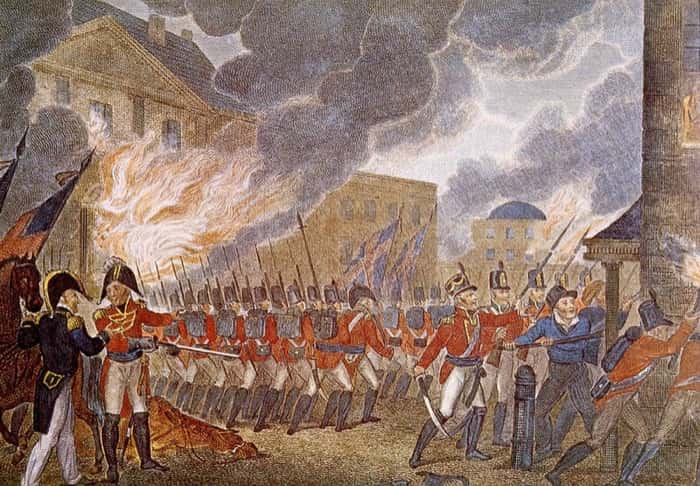
On this day in history, August 24, 1814, British forces marched into Washington D.C. and set the Capitol ablaze. The motivations behind the assault were numerous. Capturing an enemy nation's capital delivered a devastating psychological blow to American morale. From a strategic standpoint, the invasion served to divert American military forces away from Canada. On top of all that, control of the capital could have given the British significant leverage during peace negotiations.
But there was yet another driving force behind the attack—revenge. Back in 1813, American forces had torched the British territory of York (modern-day Toronto), destroying both government buildings and private property alike. The British, however, were more selective in their destruction, deliberately targeting American government buildings while leaving private property untouched. Notably, the Patent Office was spared after its head administrator made a compelling case that the patents housed within constituted private property.
Among the structures reduced to ruins were the Capitol building, the Presidential Mansion (today known as the White House), and the Library of Congress. Every single one of the 3000 volumes held by the Library of Congress was lost in the destruction. President James Madison, who had arranged escape plans ahead of time, made it out unharmed—though his wife Dolley barely escaped, getting out only at the last moment.
What ultimately saved Washington, D.C., was a ferocious storm. Four days after the initial attack, with British troops still occupying the city, a possible hurricane slammed into the area. The heavy rain put out the fires, but a tornado inflicted even further damage on the city, claiming more lives among the troops than the attack itself had. The British departed shortly afterward. The War of 1812 came to an official close on February 17, 1815, and reconstruction of the Capitol would not be completed until 1826.