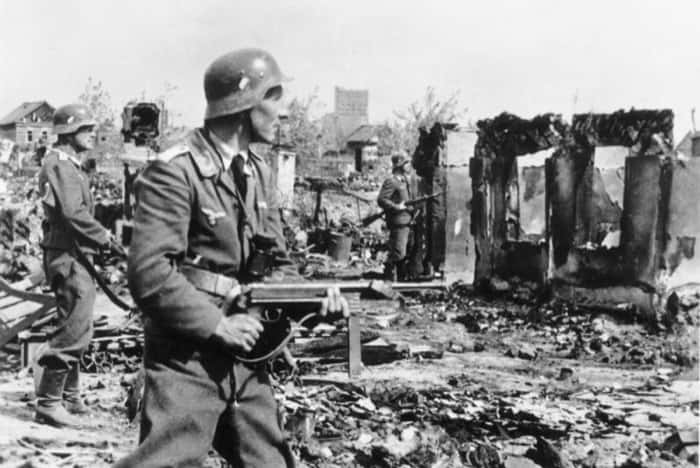
By early 1942, the global outlook was grim. Across Europe, Nazi forces and their allies had swept through enormous stretches of territory, appearing nearly impossible to stop. Germany's military machine had set its sights on Russia, aiming to knock out a major Allied power while seizing its abundant resources. Everything shifted, however, when on August 23, 1942, German forces and their allies launched an assault on the Russian city of Stalingrad.
As a major industrial center, Stalingrad was responsible for producing much of the ammunition that kept Russian soldiers supplied. Its strategic position beside the Volga River also made it a vital shipping hub. The Nazi leadership believed that capturing it would swiftly cripple Russia's military capability — a plan that seemed all the more promising because Russian forces had anticipated an attack on Moscow, not Stalingrad. In the end, however, it was the Germans themselves who found they were woefully unprepared for what awaited them.
Hitler publicly declared that every man in Stalingrad would be killed and all the women deported. That speech backfired spectacularly — it drove the entire civilian population to fight alongside the Russian army, even those who had no weapons at all. Within just a month, the city lay in ruins as combat engulfed its streets. Still, Stalingrad's residents would not surrender. Outnumbered, out-gunned, and completely cut off, they managed to hold the German forces at bay long enough for reinforcements to arrive. Once those reinforcements came, they severed the Germans inside the city from their main army. And then Russia's secret weapon arrived: winter.
Russian soldiers had spent their whole lives enduring brutal winters, but the German troops were completely unprepared for the punishing cold. Isolated from their supply lines and weakened by the freezing conditions, the German army gradually fell to Russian counterattacks. By February, the fighting was finished. The staggering losses forced Germany to redirect forces from other fronts to shore up the eastern front, triggering a domino effect of defeats across every theater where they were engaged. Stalingrad marked the moment the war's momentum reversed — Russia's victory there set in motion the chain of events that would ultimately lead to the Allied forces' triumph.