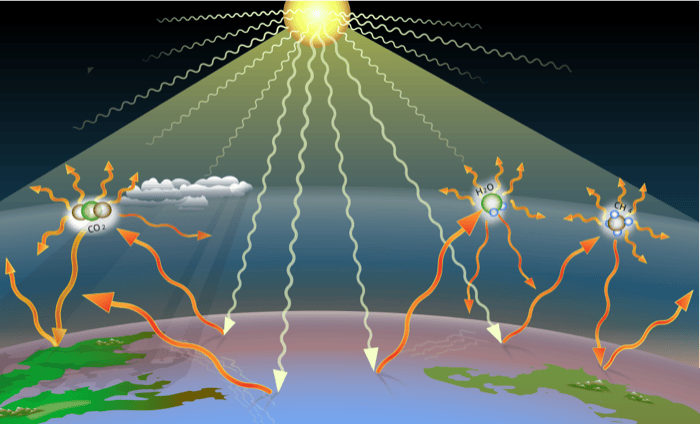
Back on August 23, 1856, something remarkable happened at the American Association for the Advancement of Science gathering in Albany, New York—a scientific finding was unveiled that wouldn't be fully appreciated for over a century. In a paper called "Circumstances Affecting the Heat of the Sun's Rays," Eunice Newton Foote laid out the earliest known explanation of what we now call the greenhouse effect. Her work preceded the much more celebrated research of John Tyndall by a full three years.
A Pioneer's Experiment
Hailing from Seneca Falls, New York, Eunice Foote wore many hats—scientist, inventor, and champion of women's rights. What makes her experiments especially impressive is how straightforward her setup was. She took 30-inch cylindrical jars, filled them with various gases—moist air, dry air, carbon dioxide, oxygen, and hydrogen—and placed a thermometer inside each one. Then she simply set the containers out in sunlight and tracked how effectively each gas soaked up and held onto heat.
What she found was remarkable: carbon dioxide outperformed every other gas, heating up the most and clinging to that warmth long after the jar was pulled out of the sun. This led Foote to a strikingly prescient conclusion: "An atmosphere of that gas would give to our earth a high temperature." In those few words, she had pinpointed the core mechanism driving global warming.
The Challenge of Being Heard
The 1850s were not kind to women pursuing science. As both a woman and an amateur scientist, Foote couldn't deliver her own research to the assembly. Joseph Henry, director of the Smithsonian Institution and a friend of the family, stepped in to read her paper before the AAAS audience. Even Henry confessed he had difficulty "interpreting their significance"—an honest admission that underscored just how far ahead of its era Foote's thinking really was.
The scientific establishment responded with courteous indifference. Scientific American did note "the ability of women to investigate any subject with originality and precision," but the deeper ramifications of what Foote had uncovered went largely unnoticed. Although her findings appeared in the American Journal of Science and Arts, the work slipped into obscurity almost immediately.
Lost in History
Just three years down the road, Irish physicist John Tyndall released his own research into the heat-absorbing behavior of carbon dioxide. His experiments operated at a higher level of technical sophistication, employing spectrophotometry to gauge infrared radiation absorption—an approach that brought greater precision to his results. Already a well-regarded figure in European scientific circles, Tyndall garnered broad acclaim and eventually earned the title of father of climate science.
Did Tyndall have any awareness of Foote's earlier work? Historians continue to debate the question. No direct proof exists that he ever read her paper, though he did serve on the editorial board of a journal that republished her husband's work, which had appeared alongside her own. In any case, Tyndall's elevated standing in the scientific world, combined with his more advanced methodology, effectively eclipsed Foote's revolutionary discoveries.
Rediscovery and Finally Recognition
For well over a century, Foote's contributions gathered dust—until 2011, when Ray Sorenson, a retired petroleum geologist, stumbled upon her work while building a collection of historical science books. That chance rediscovery ignited fresh interest in her achievements and led to long-overdue acknowledgment of her essential role in climate science. It's worth noting that historian Elizabeth Wagner Reed had actually recognized Foote's significance decades earlier, writing in 1992 that Foote "demonstrated what we call the greenhouse effect today." Reed herself understood the struggle of working as a female scientist, having made meaningful contributions to genetics research while laboring in her husband's shadow.
In our own time, Eunice Foote is at last being celebrated as the first scientist to draw a direct line between atmospheric carbon dioxide and global warming. Her discovery has only grown more urgent as humanity confronts the realities of climate change in the 21st century.