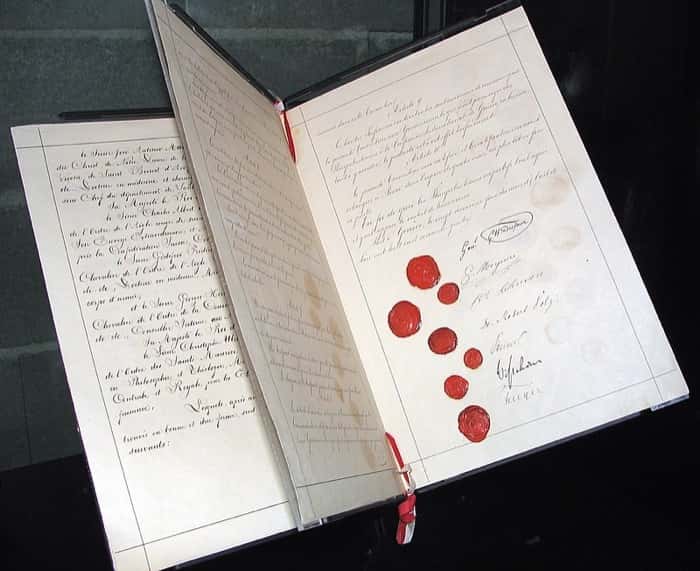
The Geneva Conventions are widely recognized today as one of humanity's most important responses to the brutality of armed conflict. These landmark treaties establish the rules by which nations wage war, covering everything from safeguarding medical workers and guaranteeing treatment for injured soldiers — no matter which side they fight for — to shielding civilians from being deliberately targeted by military forces. While the current versions of these agreements came into being following the Second World War, they weren't created from scratch. Rather, they represented revisions of treaties stretching back nearly a hundred years, with their origins rooted in a pivotal agreement reached on August 22, 1864.
The mid-1800s were defined by widespread upheaval and bloodshed across the globe. Conflicts like the American Civil War, the Crimean War, and the Sardinian War, among others, had drawn a vast share of the world's nations into fighting — and some of these wars proved exceptionally savage. Eventually, a world exhausted by warfare resolved to take action. A movement gained momentum to at least lessen the suffering endured by those swept up in armed conflict. This push culminated in 1864, when representatives gathered in Geneva, Switzerland, to tackle these urgent issues — a moment that would prove to be a watershed in the evolution of international law and humanitarian principles.
Delegates from America and every European nation converged on the Geneva conference, reflecting an extraordinary level of worldwide dedication to the cause of humanitarianism. What emerged was the first Geneva Convention — a groundbreaking treaty ensuring medical care for all combatants, protection for civilians tending to the wounded, immunity for medical facilities from wartime attacks, and much more. In the years that followed, the nations represented at the conference gradually formalized their commitment by signing the agreement, with the US adding its signature in 1882. Forged through unprecedented international cooperation, this treaty laid the groundwork for the system of protections that continues to shield wounded soldiers and civilians on battlefields around the world to this day.