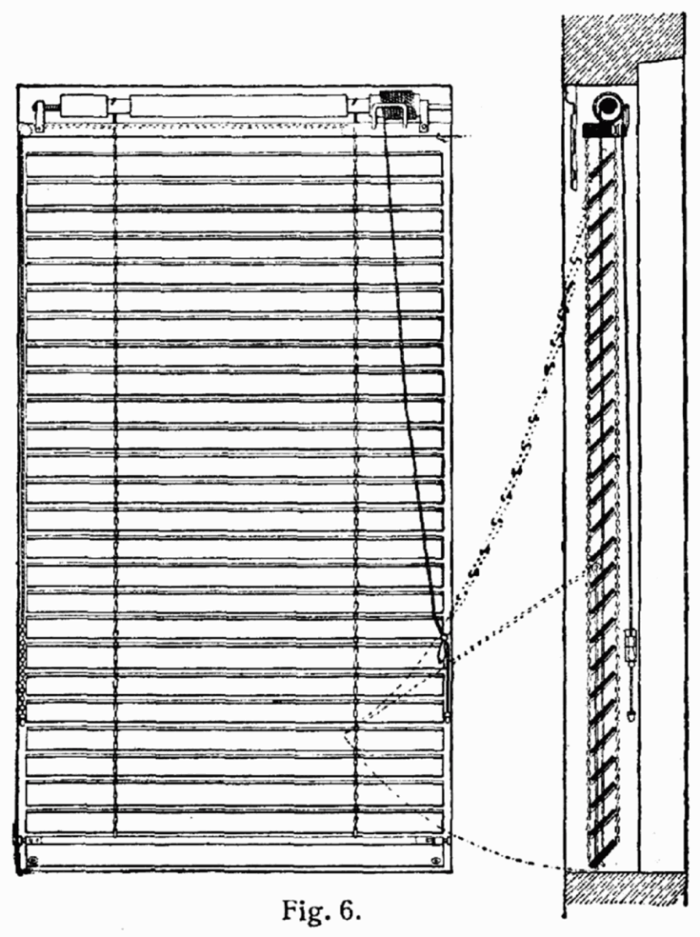
On August 21, 1841, John Hampson of New Orleans, Louisiana, received U.S. Patent No. 2,223 for a clever improvement to the design of Venetian blinds. What might sound like a minor tweak was actually a game-changer in the world of window treatments—turning a familiar but frustrating product into something far more reliable and useful for homes and vehicles alike.
The Problem That Needed Solving
If you've ever heard blinds clattering in a breeze, imagine that problem magnified tenfold inside a moving carriage or railroad car. That was the reality before Hampson came along. The slats in conventional Venetian blinds rattled noisily, swung around freely, and simply couldn't hold their position without the help of additional catches or stops. This made them especially impractical for use in vehicles. As the transportation network across the United States expanded rapidly during the early 19th century, the shortcomings of traditional blinds became an increasingly pressing concern.
Hampson's Ingenious Solution
What Hampson devised was deceptively simple yet remarkably effective. His patent outlined a mechanism for "so arranging and adding to the ordinary movable-slat Venetian shutter or blind, to make the slats fit tight endwise." In practice, this meant placing a movable strip inside a rabbeted frame, with springs nestled between the strip and the frame itself. These springs applied constant pressure against the ends of the slats, holding them firmly against their supports. The result? No more rattling, and the slats could remain in whatever position the user desired—all without needing catches or stops. Hampson himself described using "comparatively small springs" to deliver this surprisingly powerful fix.
Technical Innovation
Three detailed figures accompanied the patent, each illustrating a different aspect of how the mechanism worked. Key components included a movable strip featuring holes for the slat pivots, springs that delivered steady pressure, and a plate designed to hold everything securely in place. Hampson also pointed out that springs weren't the only option—other elastic materials, including India rubber, could serve the same purpose.
What really set Hampson apart was his forward-thinking approach to adaptability. He made it clear that he wasn't limiting himself to any specific shape or number of springs, nor to particular materials or strip configurations. This open-ended design philosophy gave manufacturers the freedom to tailor his concept for a wide range of applications and needs.
Historical Context
Venetian blinds were already a well-established feature of American architecture by 1841. They had made their way to the United States during the 18th century, with one of the earliest known installations appearing at St. Peter's Church in Philadelphia in 1761. Even so, Hampson's patent marked the first major American improvement to the fundamental Venetian blind design.
Fast forward to today, and while the materials and manufacturing techniques have changed enormously, the core idea behind Hampson's 1841 patent endures. That principle—using controlled pressure to keep slats securely in place—still underpins modern Venetian blind construction. His work stands as a shining example of American ingenuity at its best: solving an everyday problem with a simple, elegant mechanical solution.