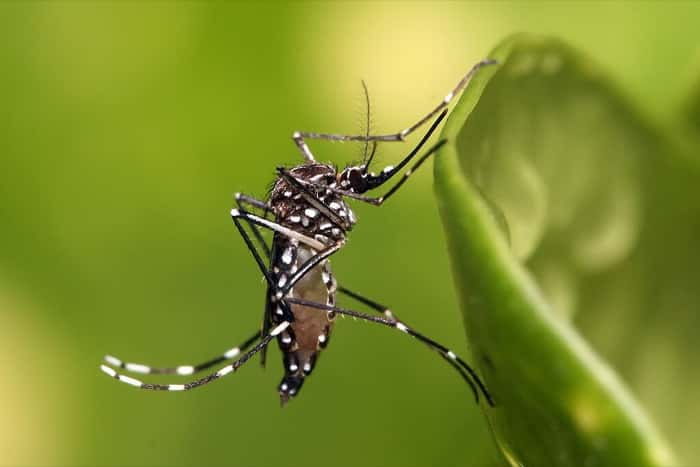
On August 20, 1897, working in a humble laboratory in Secunderabad, India, a British physician by the name of Ronald Ross peered into his microscope—and what stared back at him would reshape our understanding of one of humanity's oldest killers.
What He Discovered
His finding that day went far beyond identifying a parasite. Ronald Ross had uncovered the crucial connection between mosquitoes and malaria, shattering centuries of speculation and establishing a cornerstone of modern public health.
Here's the breakthrough in plain terms:
- Ross dissected a mosquito that had fed on a patient with malaria.
- Inside its stomach, he found pigmented cells—Plasmodium parasites.
- Four days earlier, he had let those mosquitoes bite a patient named Abdul Kadir.
- Now, he could prove the parasite survived and developed inside the mosquito.
But this wasn't some lucky accident. Ross meticulously traced the parasite's path through the insect:
- It migrated from the mosquito's gut to its salivary glands.
- From there, it could be injected into a new host through a bite.
- That meant mosquitoes weren't just pests—they were vectors of the malaria parasite.
Why it Mattered
- For thousands of years, malaria had tormented humankind. Even the word itself, "mal aria", translates to "bad air"—a relic of long-held misconceptions about what caused the disease.
- Well into the 1800s, the prevailing scientific wisdom pointed to swamp vapors or contaminated water as the culprit.
- What Ross delivered was the first definitive, biological explanation: mosquitoes were carrying the disease from person to person.
The path to this revelation was anything but smooth. His mentor, Patrick Manson, had initially held the view that malaria spread through drinking water—yet it was Manson who urged Ross to press on with his investigations. The labor was exhausting and often thankless. Lacking formal training in entomology, Ross resorted to fishing guides to help him classify different mosquito species.
Validation from the broader scientific community would follow. Giovanni Grassi, an Italian scientist, went on to demonstrate that the Anopheles mosquito specifically transmitted the parasite to humans. Still, it was Ross who had revealed the life cycle in birds and built the essential foundation upon which everything else rested.
The Aftermath
This groundbreaking work earned him the 1902 Nobel Prize in Physiology or Medicine—a historic distinction as both the first awarded to a Briton and the first recognizing research into tropical diseases.
Ross was far more than a man of science, though. He was also a poet, musician, and mathematician who penned romantic fiction and eventually created mathematical models to describe how diseases spread through populations. Yet it's his work with the mosquito that cemented his legacy.
The ripple effects of his discovery extended well beyond explaining malaria. It fundamentally transformed how we combat disease:
- Draining swamps.
- Killing mosquitoes.
- Breaking the transmission cycle.
These remain core public health strategies to this day. And what about August 20? Ross himself christened it "Mosquito Day"—an homage to the tiny creature that helped him crack the mystery. It's now observed worldwide as World Mosquito Day.