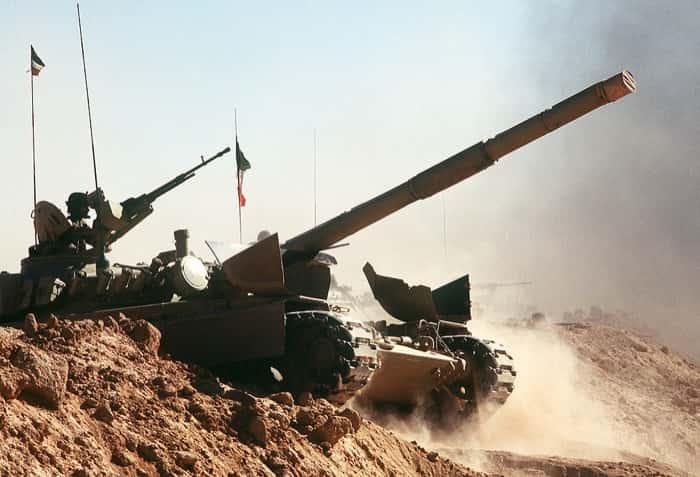
When dawn broke on August 2, 1990, Saddam Hussein sent his tanks crashing across the border into Kuwait. In just 48 hours, that small Gulf nation was completely overrun. The reverberations would reshape the world.
Saddam Hussein, Iraq's dictator, justified the assault by accusing Kuwait of slant drilling into Iraq's Rumaila field to siphon off oil. But his true ambitions ran much deeper — wiping out Iraq's crushing war debt and consolidating his grip on regional power. Kuwait's armed forces were hopelessly outmatched by Iraq's military, which ranked among the largest on the planet at the time. The invasion was devastatingly swift, sending the Kuwaiti royal family fleeing for their lives. Saddam's forces bombed the Emir's palace, and he promptly declared Kuwait Iraq's 19th province.
Shock rippled through the international community. The United Nations wasted no time condemning the invasion, and sanctions quickly followed. Then came the defining words of U.S. President George H. W. Bush — a promise that would alter the course of events: "This aggression will not stand."
The World Braced For War
- Within days, Operation Desert Shield was underway, as U.S. troops poured into Saudi Arabia to block any further Iraqi advance.
- By January 1991, Saddam had ignored the UN's withdrawal deadline, triggering Operation Desert Storm. Baghdad's skies erupted under a massive air campaign. A lightning-fast ground offensive followed, liberating Kuwait in a mere 100-hour campaign.
- The conflict ushered in the era of 24-hour news coverage, precision-guided missiles, and a fundamentally new demonstration of American military might.
Far more than a catalyst for war, this invasion reshaped global alliances and fueled fierce debates over oil and military intervention. It also planted the seeds for America's deeper entanglement in the Middle East. Thirty-five years later, the shockwaves from that morning haven't faded. What started as a brazen land grab became one of the defining geopolitical turning points of the modern era.