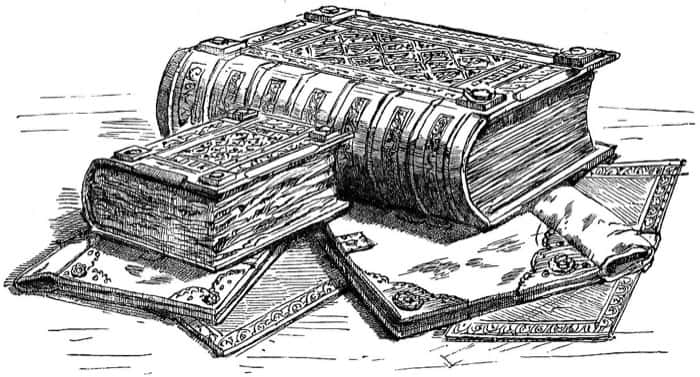
On this day in 1086—August 1, to be precise—William I of England received the finished results of an extraordinary undertaking: his Domesday inquiry. What he held was nothing short of a complete inventory of every piece of taxable land across England and Wales, a document we now call the Domesday Book. Where earlier kings had tried and failed to accomplish such a thorough accounting, William succeeded, making this a remarkable administrative achievement. The resulting record captured detailed information about land ownership and resources, serving as an indispensable tool for both taxation and the broader machinery of governance.
It was back in 1066 that William had crossed the Channel and invaded England, ultimately defeating Harold II on October 14 at the Battle of Hastings (and as it happened, his army's presence at Hastings was pure luck—not part of any deliberate strategy!). By Christmas day 1066, he had been crowned at Westminster Abbey, though the coronation itself was rushed and sacrificed to ensure his claim to the throne was secured without delay. William would go on to rule until his death in 1087. Because he left behind no children, the feudal system he governed under persisted unchanged until Henry I took the throne.
Among the new laws William established across England was a notable provision: it permitted a baron to provide his eldest son with £20 annually for life, in cases where land was set to pass to that son.
More Facts:
- A fearsome military leader, William the Conqueror secured a decisive triumph at Hastings in 1066, launching the Norman conquest of England. This victory ushered in his kingship and stands as one of the most pivotal turning points in the story of English history.
- With Hastings behind him, William turned his attention to reshaping the political and administrative structures of the realm he now controlled.
- William proved to be a formidable sovereign, and his era has frequently been described as a 'golden age' for England—even though his dealings with the Anglo-Saxons were less effective than his ability to bring the Normans to heel. This so-called 'golden age' was defined by sweeping administrative reforms, a period of economic stability, and meaningful cultural interchange between Norman and Anglo-Saxon populations.
- The impact of William's policies on the English people was real and enduring, though far from uniformly positive. The enthusiasm that greeted him during the initial invasion faded considerably once he assumed the crown, and public sentiment shifted against him over time.
- By 1075, after roughly a decade of simmering Norman-related grievances, a significant uprising erupted in northern England known as the Revolt of the Earls. At its helm were influential Anglo-Saxon nobles who had grown deeply resentful of William's governance. The rebellion was ultimately crushed, but not without cost—William himself suffered injuries, and Henry I, Duke of Normandy, was killed in the fighting. The episode underscored the persistent friction between Normans and Anglo-Saxons, as well as the very real difficulties William faced in holding his kingdom together.