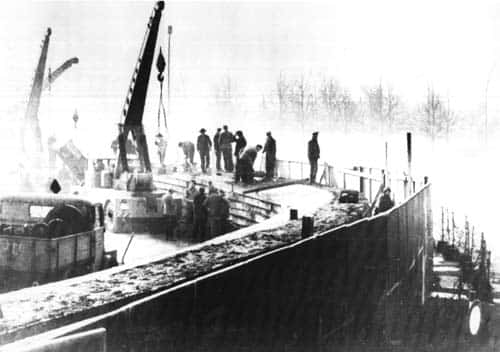
Just four days after East German forces first unfurled barbed wire across the heart of Berlin, what had seemed like a temporary provocation was hardening into something far more permanent. The early hours of August 13 had been swift and brutal — streets ripped apart, railway lines cut, and an entire city cleaved in two while armed guards looked on. But by August 17, 1961, the operation had moved well beyond wire and makeshift fencing. Something more imposing was taking form: the Berlin Wall itself.
Why a Wall?
In the aftermath of World War II, Berlin found itself carved into four sectors, each administered by one of the Allied powers. Under Soviet control, East Germany was hemorrhaging people at an alarming rate — three million fled westward between 1949 and 1961. Among them were skilled workers, professionals, and young talent, and their departure was gutting the communist state's economy from the inside out. Moscow's answer? Seal the border with a wall.
The Shock of August 13
- Under cover of darkness, 14,500 East German troops took up positions across the city.
- Every road and rail line leading into West Berlin was cut off.
- Soldiers stood watch as work crews unrolled barbed wire and tore up streets.
- When Berliners woke that morning, they discovered that neighbors, friends, and family had become suddenly, impossibly unreachable.
By August 17 – From Wire to Wall
- What had started as temporary barriers was already giving way to concrete.
- Streets were sealed off for good; within months, crossing points would plummet from 81 to a mere seven.
- Checkpoint Charlie quickly became a nerve-wracking gateway straddling two worlds.
- West Berlin was transformed into a walled-off island, surrounded entirely by East German territory.
Eyewitness Accounts
Robert Lochner, who headed West Berlin's RIAS radio, ventured into East Berlin multiple times during that first chaotic night. He watched work crews ripping up pavement under armed supervision — "each with a soldier with a gun behind him to prevent him from defecting". Meanwhile, on the western side, furious crowds demanded the wire be torn down. At Friedrichstrasse Station, Robert Lochner encountered thousands of stranded people clutching cardboard boxes, their faces blank with disbelief. One woman wanted to know when the next train to West Berlin would leave. The guard's answer was chilling: "That is all over — you are all sitting in a mousetrap now."
The Cold War's Harshest Symbol
Over time, the Wall would metastasize into a 140-kilometer fortress.
- By the late 1970s, the system had grown to include twin barriers standing 3.6 meters high, electric fencing, 116 watchtowers, floodlights, alarms, and a garrison of 14,000 guards.
- Attempting to escape meant risking your life; several hundred people died in the effort. The oldest known victim, Olga Segler, was 80 years old.
Why No Intervention?
American, British, and French forces retained their right of access to East Berlin. But the Wall had been erected just inside East German territory, which made any direct military confrontation an extraordinarily dangerous gamble. As one U.S. officer put it, intervening "could have brought about some type of hostilities" — and that was a risk President Kennedy refused to take.
For 28 years, the Wall endured as the Cold War's defining scar. It tore families apart, froze a city in place, and served as a daily testament to how ideology could transform brick and barbed wire into a prison. When it finally came down on November 9, 1989, the world celebrated — but August 1961 remains the moment when freedom's divide was set in concrete.
Imagine yourself in Berlin during that week in 1961, watching history rise before your eyes — literally — one gray slab at a time. Would you have seen a prison wall going up, or a line of defense? History's verdict, it turns out, depended entirely on which side you were standing.