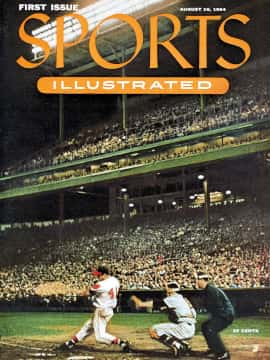
A brand-new magazine hit newsstands on August 16, 1954, and it would go on to reshape how Americans consumed sports coverage. Sports Illustrated certainly wasn't the first publication dedicated to athletics, but nothing before it had tackled the subject on a nationwide level with such polish and ambition.
The Debut Cover
Eddie Mathews, the Milwaukee Braves slugger, stood frozen mid-swing on that inaugural cover—an image pulled from a June baseball game. Behind him crouched New York Giants catcher Wes Westrum, while umpire Augie Donatelli presided over the action. The photograph was a statement of intent: sports captured with both artistry and immediacy.
Inside Time Inc., the concept behind Sports Illustrated had met plenty of resistance. Henry Luce, the company's founder, wasn't even a sports fan, and skeptics questioned whether athletics alone could sustain a weekly publication—particularly when the off-season rolled around. Yet Luce recognized something shifting in the culture. Post-war America was in the midst of a boom. Television was piping live sporting events directly into living rooms. And fans were hungry for something deeper than box scores.
That debut issue went far beyond simple game recaps. A sprawling feature article revisited what many called the "Mile of the Century"—a dramatic head-to-head clash at the British Empire & Commonwealth Games pitting Roger Bannister, the first human to crack the four-minute mile, against John Landy, who had soon after surpassed his mark. Rather than merely recounting the race, the piece elevated it into a global spectacle, a collision at the very edge of human capability.
Meanwhile, the Cold War had seeped into the world of athletics. Soviet "super-amateurs" were training with the intensity of professionals, turning Olympic competition into a stage for geopolitical rivalry. As writer Gerald Holland cautioned, sport was transforming into "war minus the shooting."
The Impact
Right from its launch, Sports Illustrated aimed to do far more than simply document games. It positioned sports as a genuine cultural force—shaped by politics, economics, and evolving ideas about what it meant to be an athlete. Training regimens were undergoing radical change. Science and technology were making their way into the locker room. The era of the weekend warrior was fading, replaced by athletes who were finely tuned machines.
Financial success didn't come quickly—the magazine needed 12 years before it turned a profit—but its timing proved prescient. In the decades ahead, professional sports would explode in popularity as television, corporate sponsorship, and global competition transformed the entire industry. Sports Illustrated would be present through all of it, its covers becoming cultural icons and its long-form journalism establishing the gold standard for sports writing.
From today's vantage point, that first issue, published in 1954, reads unmistakably like a time capsule. It preserves a snapshot of the sporting world teetering on the brink of massive transformation—a moment where post-war optimism collided with Cold War tension and the fundamental nature of competition was being reimagined.