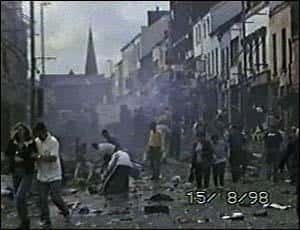
A devastating blast tore through the heart of Omagh in Northern Ireland on August 15, 1998. At 3:10 p.m., a 500-pound car bomb went off in a crowded shopping center, claiming 29 lives and leaving more than 200 people injured. The attack was carried out by the Real Irish Republican Army (RIRA), a dissident republican faction that had broken away from the IRA in opposition to the recently signed Good Friday Agreement. Across three decades of civil war, no single attack had come close to being this deadly.
The roots of the conflict — widely referred to as the Troubles — stretched back to the late 1960s, when republican and loyalist paramilitary groups began their violent struggle. The Good Friday Agreement of 1998 represented an effort by both sides to bring an end to what many called a "low-level war." While the terms of the agreement drew criticism from various quarters, RIRA stood out for its especially violent response. Having broken away from the IRA, the group launched a sustained bombing campaign across Northern Ireland.
What made the Omagh attack so shocking was that, up to that point, RIRA had appeared to go out of its way to avoid civilian casualties. Their typical approach involved targeting commercial properties and phoning in warnings to authorities, giving them time to clear the area. But the warnings issued on August 15 pointed in the wrong direction — callers suggested the bomb was located near the courthouse. Tragically, this led law enforcement to guide civilians directly toward where the bomb actually was. Whether this misdirection was deliberate remains unknown. In the aftermath, RIRA members maintained their longstanding claim that civilians were never their intended targets.
Despite the horror of Omagh, the Good Friday Agreement moved ahead. It succeeded in disarming the paramilitary groups and creating a power-sharing government in Northern Ireland. Though the Troubles weren't entirely brought to a close, the level of violence did diminish. RIRA declared a cease-fire in the wake of the bombing but later went back on that commitment. To this day, no one has ever been officially charged for the attack, although some individuals have been held liable through civil court proceedings.