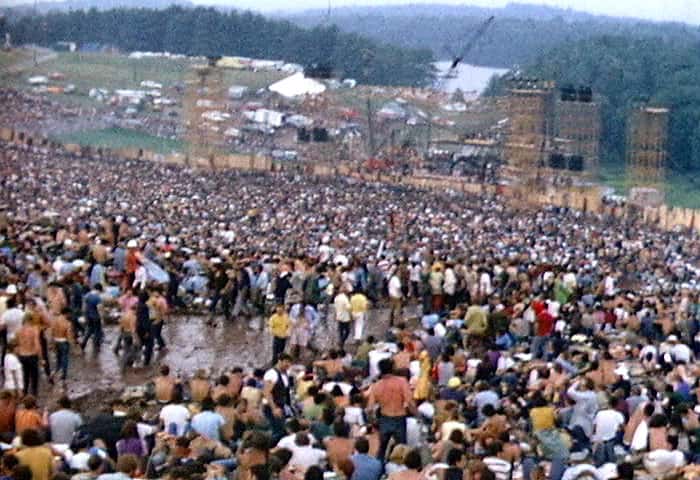
The United States during the 1960s was defined by upheaval, as political turmoil and social conflict swept across the nation. Growing outrage over the Vietnam War and domestic violence fueled widespread frustration among the populace. Ideological divides deepened, and countless Americans — particularly younger ones — pushed hard for peace and meaningful reform, feeling increasingly ignored by those in power. Against this charged backdrop, the Woodstock Music & Arts Festival was announced in 1969 as a Rock and Roll Retreat, aiming to embody the spirit of peace and love that so many were championing at the time. When the legendary festival finally kicked off on August 15, 1969, however, things didn't quite go according to the original plan.
The Original Vision:
- It all started when two young entrepreneurs, John Roberts and Joel Rosenman, went looking for investment opportunities. They joined forces with music executives Michael Lang and Artie Kornfeld to build a music studio. That concept gradually shifted into staging a concert as a fundraising vehicle for the studio — and just like that, the Woodstock concert idea came to life.
- Recognizing the younger generations' passionate calls for peace, love, and community, the group saw an opportunity to organize a festival showcasing popular countercultural acts. Their plan was to generate revenue through event advertising and admission fees.
- A dairy farm in Bethel, New York became the chosen venue, and the investors expected a turnout of roughly 50,000 people.
Excitement around the music festival snowballed at a remarkable pace. Interestingly, early pushback from local residents and authorities in New York only served to amplify the buzz and anticipation among would-be attendees. Word traveled fast — through newspapers, local radio stations, and good old-fashioned word of mouth. By opening day, more than 400,000 confirmed guests had registered, throwing a serious wrench into the venue's logistical plans. Faced with this overwhelming response, the organizers had no choice but to declare the Woodstock Music & Arts Festival free of charge.
Iconic Musical Acts at Woodstock 1969:
- Jimi Hendrix
- The Who
- Joe Crocker
- Janis Joplin
- Creedence Clearwater Revival
- Santana & More…
Cultural Impact
For the counterculture movement of the 1960s, the 1969 Woodstock Music & Arts Festival became nothing short of a defining milestone. This enormous gathering stood as a powerful symbol of the peace and love that so many people craved during that era. Beyond its cultural significance, the festival left a lasting mark on the music industry itself — sparking a wave of larger concerts, more festival-style events centered on music, and a surge in rock-influenced production. Woodstock captured the idealism of its time, and its reverberations continue to be felt to this day.