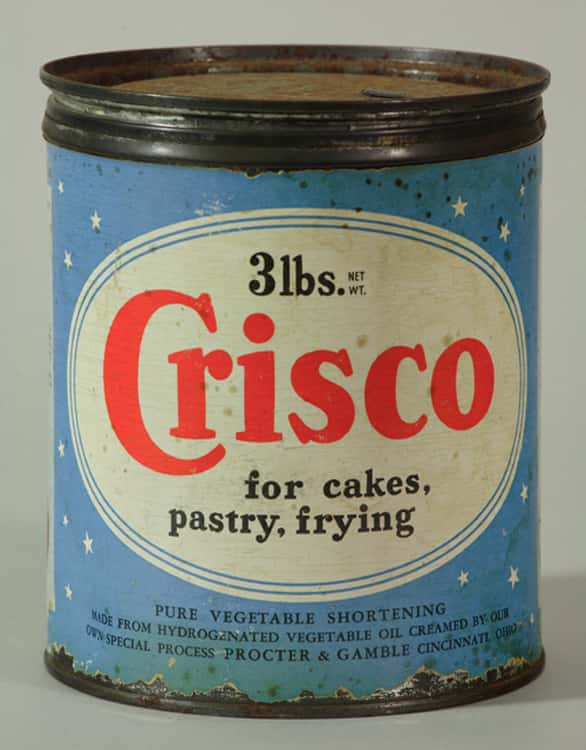
In the opening years of the twentieth century, Procter & Gamble set out with a specific goal: producing a hardened soap using vegetable fats. The end result, though, turned out to be something far more significant for American kitchens. On August 15, 1911, the Cincinnati-based company unveiled Crisco to the world—a groundbreaking solid shortening crafted entirely from vegetable oil.
From Cottonseed to Kitchen Staple
The name "Crisco" derives from "crystallized cottonseed," a nod to the vegetable oil originally used in its production. What made the product possible was hydrogenation, a technique that converts liquid oil into a fat that remains solid at room temperature. Thanks to this process, Crisco could step in for butter or lard across baking, frying, and everyday cooking—while also boasting a longer shelf life.
Animal fats dominated most kitchens during this era. Butter came with a hefty price tag, and lard, with its pronounced flavor, was falling out of favor among homemakers who were increasingly health-conscious. Crisco arrived as a clean, neutral-tasting option that happened to be easier on the wallet, too.
Selling the Idea of 'Better Than Butter'
Getting people to actually buy Crisco was a whole separate battle for Procter & Gamble (P&G). Back in 1911, the public harbored significant skepticism toward anything perceived as an "imitation" food. So how did P&G break through? They rolled out one of the earliest comprehensive modern advertising campaigns ever seen. Their pitch positioned Crisco as both healthier than animal fat and more economical than butter. Ads popped up in newspapers, rode along on streetcars, and filled the airwaves during the golden age of radio. P&G even handed out free cookbooks packed with recipes tailored specifically for Crisco—think flaky pie crusts and golden-fried chicken. The underlying message rang loud and clear: Crisco was modern, pure, and here to stay.
A Culinary Shift
The product landed at precisely the right moment in history. Industrialization was transforming America, urban populations were swelling, and food preservation had become an increasingly pressing issue. With its long shelf life, Crisco proved ideal for both busy households and distribution to rural areas. P&G delivered something home cooks had never quite had before: reliability—a consistent product unaffected by seasonal fluctuations or dairy shortages. Within a decade, Crisco had overtaken lard to dominate the shortening market.
Later Years and Lasting Impact
As the decades rolled on, Crisco evolved with the times. In 2002, J.M. Smucker Company acquired the brand and eliminated trans fats in response to modern health concerns. These days, Crisco is available in multiple forms—solid shortening, liquid oils, and cooking sprays—yet the original product's influence continues to resonate in kitchens everywhere.