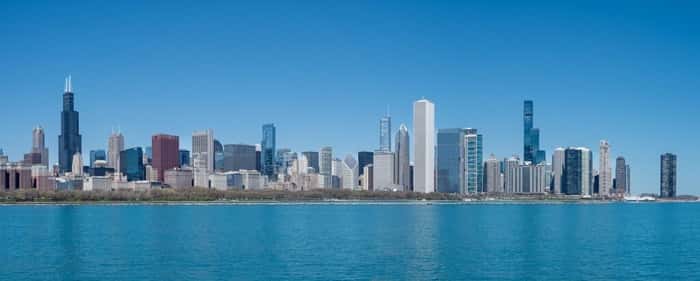
Picturing Chicago as anything other than the sprawling, vibrant metropolis it is today takes real effort. This is, after all, one of the most populous and busiest cities in the United States—a massive transportation hub, an economic powerhouse, and a magnet for visitors from around the globe. Yet there was a time when none of that existed. It was on August 10, 1833, a full fifty years after the area's initial settlement, that residents cast their votes for a board of trustees, an election that formally sealed Chicago's incorporation as a town.
Nestled along the shores of Lake Michigan—the fifth-largest freshwater lake in the world—Chicago sits in the northern part of Illinois. Long before any permanent structures rose there, the land was home to several Native American tribes, among them the Miami and the Potawatomi. Then came Jean Baptiste Point du Sable, a French-African trader who saw something special in this location. Recognizing both its strategic value and its promise as a future hub, he founded what would become Chicago's first permanent settlement in early 1779. Today, he is celebrated as the "Founder of Chicago."
The pace at which Chicago expanded was nothing short of extraordinary. At the time of its incorporation as a town in 1833, roughly 300 people called it home. Just five years later, that number had exploded past 6,000. Drawn by its strategic positioning, settlers poured in from all corners of the United States and beyond, fueling rapid economic growth. By 1837, Chicago had earned official incorporation as a city, empowering local authorities to pass ordinances designed to keep up with the surging population and relentless expansion.
Fast forward to the present, and Chicago stands as one of the major metropolitan areas in the United States, home to an estimated 2.7 million people—making it the third-largest city in the country by population. That modest town of 300 residents, which first drew people with its advantageous location and promise of opportunity, hasn't lost its pull. To this day, people continue flocking to Chicago, chasing the same opportunities and influence that made it irresistible from the very beginning.