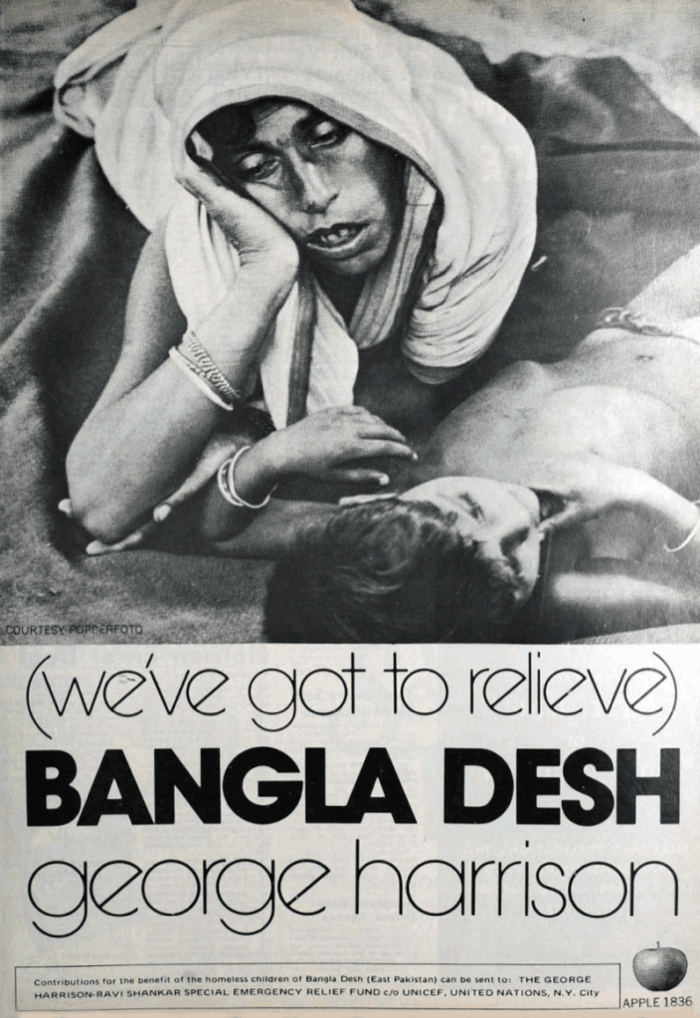
Something extraordinary happened at Madison Square Garden on August 1, 1971—something that forever changed the relationship between popular music and global activism. The Concert for Bangladesh brought together some of rock's biggest names for a cause that desperately needed the world's attention.
It all started with Ravi Shankar, the legendary Indian sitar maestro, who was watching a devastating humanitarian crisis unfold in East Pakistan, now known as Bangladesh. Civil war, famine, and floods had driven millions of refugees across the border into India. Shankar knew he needed help amplifying the message, so he turned to his friend George Harrison, convinced that the rock star's fame could mobilize real support.
Harrison jumped in without hesitation, transforming Shankar's vision into a landmark event in just a matter of weeks.
Two shows. One day. Over 40,000 fans packed into the Garden.
And what a roster of talent took the stage:
- Bob Dylan, rarely seen in live performance, made a surprise appearance.
- Eric Clapton performed while battling heroin withdrawal.
- Ringo Starr, Harrison's fellow Beatle, was right there alongside him.
- Billy Preston, Leon Russell, and members of Badfinger rounded out the bill with their own brilliance.
Every performer brought raw intensity and deep feeling to their set. Dylan's return to the stage alone was enough to make headlines. Harrison delivered a haunting, emotionally charged rendition of "Bangla Desh." And Shankar's opening classical performance left the rock-oriented audience in stunned, reverent silence.
Yet the significance of the day extended far beyond what happened on stage.
- More than $250,000 was raised that single day—a sum virtually unheard of for the era.
- It became the first major rock concert organized around a humanitarian cause.
- Revenue generated by the album and film that followed was directed to UNICEF.
As Harrison himself put it, "The concert was Ravi Shankar's idea… after half an hour, he talked me into being on the show."
The ripple effects of the Concert for Bangladesh proved enormous, laying the groundwork for Live Aid and every benefit concert that came after it. Rock music, it turned out, could serve as a genuine engine for real-world change. The event also gave rise to the George Harrison Fund for UNICEF, an initiative that still supports children worldwide to this day. Admittedly, the road wasn't entirely smooth—logistical hurdles and bureaucratic delays meant that funds didn't reach Bangladesh for several months—but none of that diminishes the concert's enduring legacy.
What August 1, 1971, ultimately revealed was the transformative power of artists coming together with shared purpose. They didn't simply raise money—they raised consciousness. They showed the world that music could matter, and it could matter loudly, beautifully, and urgently.