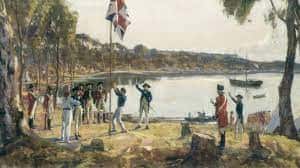
What are the odds that a fleet of convict ships could lay the foundation for one of the most stable nations on Earth? On May 13, 1787, Arthur Phillip departed with the First Fleet — 11 ships packed with criminals — bound for Australia with the goal of establishing a colony. The whole enterprise seemed destined to fail: a massive group of people being forcibly transported to a dangerous, largely unexplored land, all to labor for the very authorities sending them there. And yet, history has a way of defying expectations.
The journey itself got off to a rocky start, with a mutiny attempt breaking out during the long voyage to the far-off continent. Fortunately, it was suppressed without much difficulty, and nearly everyone arrived in Australia in reasonably good condition. Upon landing, the colonists encountered the Aboriginal people already inhabiting the region. Phillip, unlike many of his contemporaries, held comparatively progressive attitudes toward Indigenous peoples. He managed to establish friendly relations and forge an agreement of mutual assistance. With their help, Phillips and his men surveyed the surrounding area near their landing site and founded the colony of Sydney in the region now called New South Wales.
The colonists were fortunate to have Phillips serving as their Crown-appointed governor. Drawing on his political connections back in England, he worked relentlessly to secure adequate supplies for the struggling settlement during those precarious early years, preventing any catastrophic widespread famine. His background — a lifetime spent in Naval service and farming — had prepared him well, though no one could have foreseen just how effective he would turn out to be as a governor under such challenging conditions.
Despite its origins as a dumping ground for convicted criminals, Australia gradually evolved in a far more law-abiding direction. In fact, modern Australia boasts one of the lowest crime rates in the world, significantly lower than that of the United States.