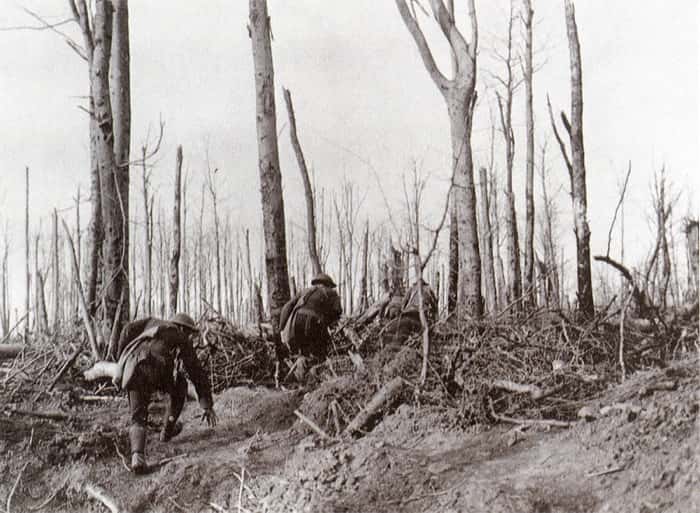
On April 6, 1917, the United States made the momentous decision to enter World War I, a move driven by relentless German provocations that would fundamentally reshape both the trajectory of the conflict and America's standing on the world stage. Millions of Americans were mobilized under the leadership of General John J. Pershing, bolstering the Allied cause in dramatic fashion. One pivotal factor in turning public sentiment toward intervention was British intelligence's interception of the Zimmermann Telegram. This explosive document exposed Germany's scheme to lure Mexico into a military alliance against the United States — a shocking revelation that ignited widespread outrage among Americans and accelerated the nation's march toward war.
President Woodrow Wilson, who loomed large in the chain of events preceding America's involvement in World War I, had originally championed neutrality. His conviction was that the country stood to benefit most by steering clear of Europe's entanglements. Maintaining that position, however, proved increasingly difficult. Anti-war sentiment was surging across the nation, forging unlikely alliances between figures as different as the radical anarchist Emma Goldman and the middle-class reformer Jane Addams.
Congress finalized the war resolution on April 6, and the United States officially declared war on Germany, aligning itself with the Allies — Russia, France, and Britain — in opposition to Germany and Austria-Hungary. Under General John J. Pershing's command, military leaders launched a remarkable recruitment effort that assembled more than two million soldiers into the American Expeditionary Forces (AEF). Fueled by sweeping propaganda campaigns and the enactment of the Selective Service Act, this enormous undertaking drew millions of young men into military service, whether by choice or by conscription.
By 1918, American forces had established a formidable presence across Europe, delivering fresh troops, vital supplies, and a much-needed surge of morale at a decisive moment in the conflict. These crucial reinforcements helped tip the scales, contributing directly to the Armistice of November 11, 1918. The toll was staggering — more than 116,000 American lives lost — yet the war's lasting impact was undeniable, firmly establishing the United States as a dominant force in both the political arena and the economic domain.
Legacy
In the aftermath of World War I, the United States emerged as a preeminent global power, propelled by military expansion, economic supremacy, and deepening involvement in international politics. The war ushered in a fundamental transformation of government functions for Americans, while democratic movements that took root during the conflict went on to shape the course of the twentieth century.