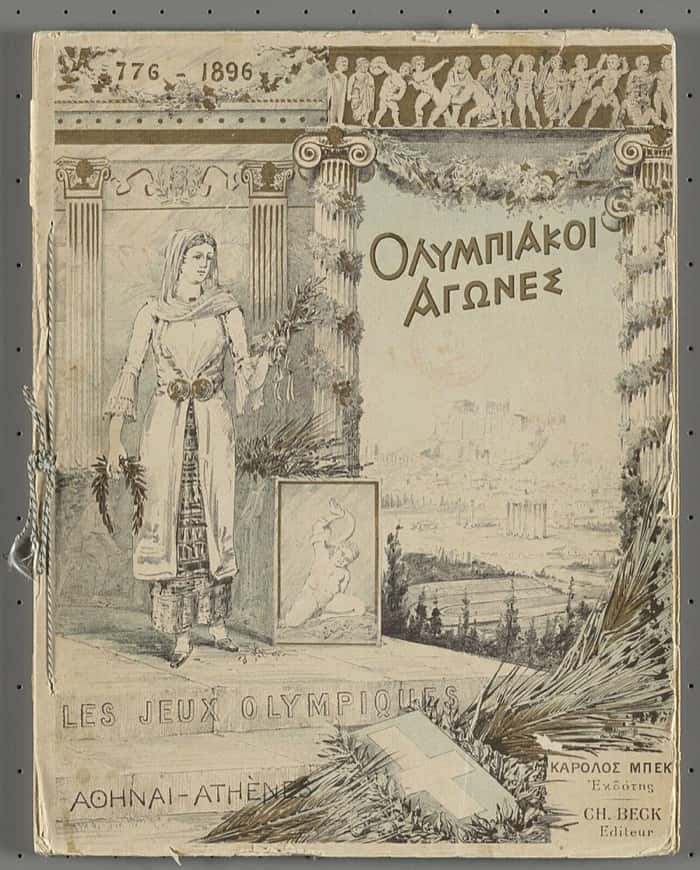
On April 6, 1896, the city of Athens, Greece, stepped onto the world stage in a truly remarkable way — hosting the first modern Olympic Games and breathing new life into a tradition that had lain dormant for more than 1,500 years. The driving force behind this revival was Pierre de Coubertin, a visionary who looked to ancient Greece for inspiration and sought to use athletic competition as a vehicle for fostering national unity and peaceful coexistence among nations.
The roots of the Olympic Games stretch all the way back to 776 BCE, when athletes in ancient Greece first competed at Olympia in contests deeply intertwined with religious and cultural practices. That centuries-long tradition came to an end under Roman rule, when Emperor Theodosius I officially banned the games in 393 CE. By choosing Athens as the launching point for his reimagined competition, De Coubertin made a deeply symbolic choice — the city represented nothing less than the cradle of the ancient Games themselves.
What unfolded in Athens would lay the groundwork for a worldwide Olympic system that endured through periods of two global wars. A total of 280 male competitors representing 13 nations gathered to compete across nine sports venues, with events ranging from gymnastics to track and field. At the heart of it all stood the Panathenaic Stadium, beautifully restored in brilliant white marble. Some 80,000 passionate spectators packed the stands, rallying behind Greece as the host nation claimed the spotlight in this newly emerging worldwide movement.
No moment captured the spirit of those Games quite like the marathon, an event rooted in the legendary tale of Pheidippides. It was Greek runner Spyridon Louis who seized victory in the race, earning both national and international acclaim and coming to embody two powerful symbolic qualities — heroism and endurance.
Legacy
These inaugural Games marked the beginning of the modern Olympic Movement's evolution into a truly global ritual. The standard four-year event structure established early on proved resilient enough to survive two world wars. While the early Games featured only male athletes, the Olympics progressively expanded — welcoming women in 1900, introducing the torch relay in 1936, and eventually adopting gender equality measures that helped shape it into the global sporting event we know today.