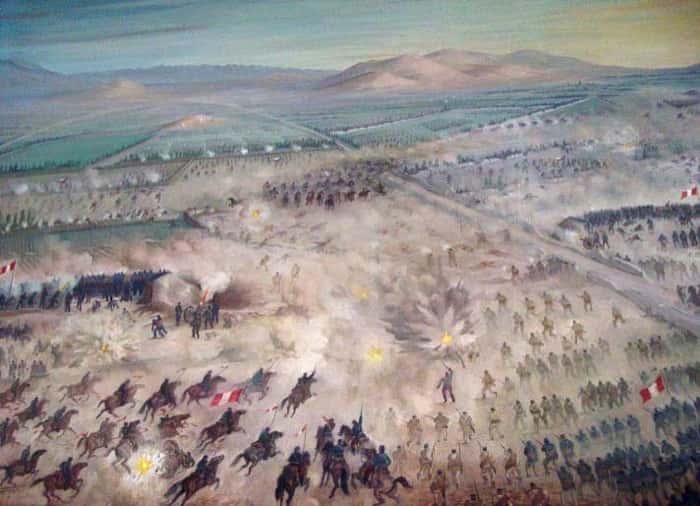
The War of the Pacific stands out as one of South America's most consequential conflicts, raging from 1879 to 1884. At its heart was a fierce contest between Chile, Peru, and Bolivia over nitrate-rich territories along the Pacific coastline. The fallout from this struggle redrew national borders, fueled deep-seated rivalries among the three nations, and left an imprint on the region's trajectory for generations.
What sparked this devastating war? It all came down to the Atacama Desert and the valuable nitrate deposits buried beneath its surface. At the time, Bolivia controlled the Pacific coastline territory, and tensions escalated when it levied higher taxes on Chilean companies mining mineral resources in the area. The dispute quickly spiraled beyond economics—Bolivia moved to confiscate Chilean holdings, prompting Chile to strike back by seizing Antofagasta, Bolivia's port on the Pacific Ocean. Peru found itself pulled into the fray as well, obligated to join by a defensive agreement it had with Bolivia.
Fighting unfolded on both sea and land. Chile's Navy secured dominance over the Pacific region after its decisive victory at the Battle of Angamos in 1879, during which it captured the Peruvian ironclad Huáscar. From there, Chilean forces pushed through Bolivia and Peru, ultimately seizing control of Lima in 1881. Peace came in stages—first through the Treaty of Ancón in 1883, and then via an additional deal with Bolivia in 1884 that formally ended hostilities. When the dust settled, Chile claimed full possession of both Antofagasta and Tarapacá, territories rich in nitrates. Bolivia, meanwhile, was stripped of its coastline, and Peru saw its boundaries permanently altered.
The war's aftermath reshaped the fortunes of all three nations. Chile rose to become South America's dominant power, enriched by the wealth flowing from its newly acquired nitrate resources. Bolivia's loss was perhaps the most dramatic—cut off from the Pacific Ocean in 1884, it became a landlocked country, a grievance that continues to drive diplomatic disputes with Chile to this day. Peru, for its part, was thrust into a prolonged era of economic struggles and political turmoil from which recovery proved slow and painful.