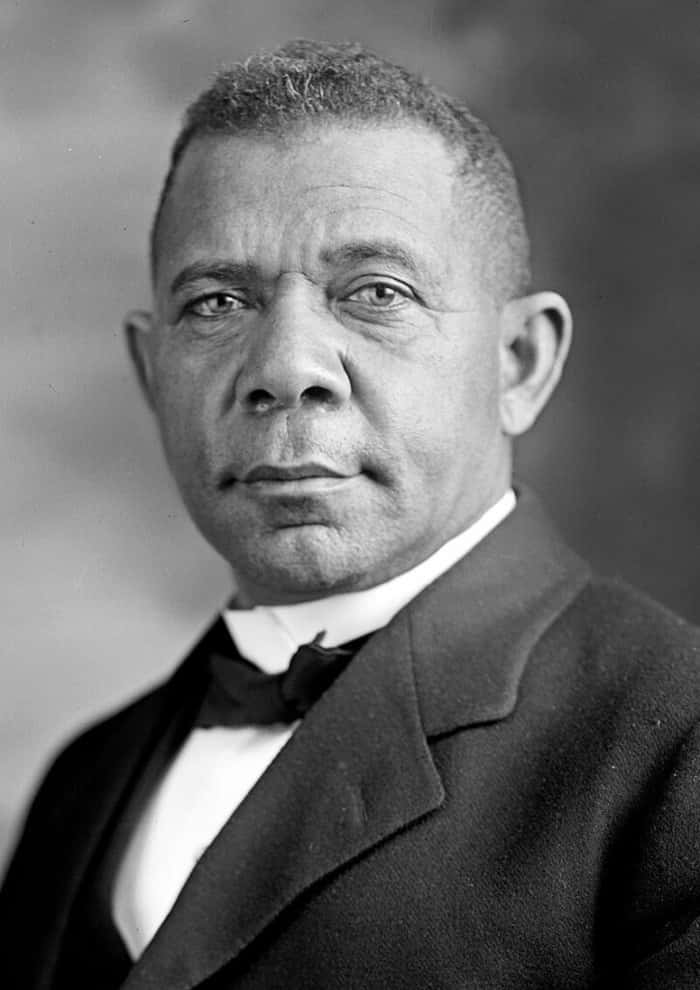
On April 5, 1856, a child who would grow to become one of America's most influential educators, authors, and leaders entered the world in Franklin County, Virginia — born into the bonds of slavery. That child was Booker Taliaferro Washington.
His mother, Jane, worked as an enslaved cook, and his father was an unidentified Caucasian man. For the first ten years of his life, Booker endured the brutal realities of enslavement. Yet within him burned an unshakable drive toward a brighter future — a determination that would come to inspire countless others. At just nine years old, he stepped into a schoolhouse and declared his name: Booker T. Washington, marking the start of a remarkable path toward freedom and self-reliance. The grueling labor he performed in salt and coal mines during those early years, while deeply challenging, forged in him an extraordinary work ethic and deepened his conviction that education held transformative power.
Driven by an unwavering desire to earn a degree — even without any money to his name — Booker T. Washington made the journey on foot to Hampton Institute in Virginia in 1872. His entrance exam was unlike any other: he was tasked with cleaning a room to perfection. Washington passed with flying colors and was given a janitorial position that, through the support of General Samuel Armstrong, covered the cost of his education. Studying under Principal Samuel Chapman Armstrong at Hampton Institution, he immersed himself in a philosophy that wove together practical education with moral and character development. He earned his degree in 1875.
Washington was chosen in 1881 to head the newly founded Tuskegee Normal and Industrial Institute in Alabama. Working with scarce resources, he built the institution from the ground up, holding early classes inside a borrowed church building. The students themselves constructed the campus, gaining hands-on expertise in carpentry and farming along the way. His prominence grew dramatically after his 1895 Atlanta Exposition speech, and a 1901 dinner invitation to the White House cemented his role as a trusted advisor to presidents.
More than just a set of ideals, Booker T. Washington's emphasis on economic empowerment, character development, and practical skills offered a concrete blueprint for advancement. Through his writings, his leadership, and his tireless work toward racial equality, he laid a foundation that empowered future generations to push harder and acquire new abilities — ensuring that his vision remains as meaningful today as it ever was.