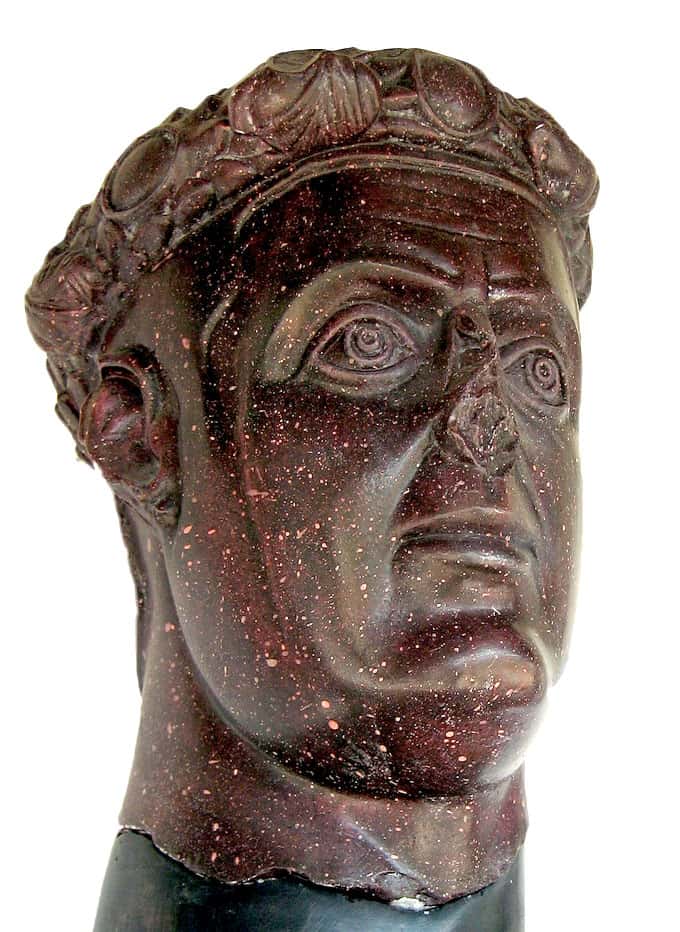
As Roman Emperor Galerius lay dying, he made a choice whose reverberations would be felt for centuries to come. On April 30, 311, weakened and confined to his deathbed, he issued what became known as the Edict of Toleration—a decree that officially put an end to the savage persecution of Christians throughout the Eastern Roman Empire.
Christians had spent the better part of a decade suffering under the harshest religious suppression Rome had ever orchestrated. This campaign, called the Diocletianic or Great Persecution, was a systematic, empire-wide assault on the Christian faith. Places of worship were razed. Sacred texts were consigned to flames. Members of the clergy faced imprisonment or death. The simple act of worship had been criminalized.
Galerius himself had once ranked among the most zealous architects of this persecution. Now, remarkably, he was undoing his own work.
By 311, a devastating illness—likely cancer—was consuming Galerius. The agony he endured, and possibly a growing dread of divine punishment, appear to have sparked a sweeping transformation in his outlook. He issued his proclamation from the city of Serdica (modern Sofia, Bulgaria), extending to Christians both legal recognition and the right to assemble, provided they did not threaten public order.
In a striking concession, Galerius acknowledged that the campaign of persecution had utterly failed to compel Christians to embrace the traditional Roman religion. He granted them permission to worship their God freely, asking only that they offer prayers for the welfare of the empire and refrain from disturbing public order. Though the edict stopped short of granting Christians full equality, it represented something unprecedented—the first official recognition of Christianity as a lawful religion within the Roman world, permitting believers to practice their faith openly within defined limits.
A Turning Point
This edict stands as a genuine landmark. It brought the Diocletianic persecution to a close across Galerius's territories and laid the groundwork for the Edict of Milan in 313. That later decree, enacted under the authority of Constantine the Great and Licinius, would proclaim complete religious freedom throughout the empire. The Edict of Milan holds particular significance because it went beyond merely extending the freedoms introduced by the Edict of Toleration—it effectively positioned Christianity as a favored religion within the Roman Empire. What Galerius set in motion went far beyond simply ending the suffering of believers—it fundamentally reshaped the trajectory of Western civilization. Christianity, so recently hunted and outlawed, would before long ascend to become the dominant faith of the Roman Empire.
Born not of strength or victory but of frailty and contemplation, the Edict of Toleration nonetheless carried monumental consequences that cast a long shadow over the centuries that followed. On April 30, 311, the Roman world crossed a threshold—taking its first official step toward religious pluralism and allowing Christianity to step out of the darkness at last.