On this day in history, the Vietnam War came to its dramatic end when North Vietnamese forces seized control of Saigon. What unfolded on April 30, 1975, brought closure to a drawn-out, bitterly divisive conflict that had stretched on for decades, leaving deep scars on both Vietnam and the United States. As a defining moment of the twentieth century, the fall of Saigon not only concluded the war but fundamentally altered the geopolitical order.
North Vietnamese troops had been sweeping through South Vietnam at a remarkable pace in the days before the capital's collapse, encountering only limited opposition along the way. Plagued by internal divisions and rapidly eroding support, the South Vietnamese government found itself unable to hold the line. As enemy forces tightened their grip around Saigon, a wave of fear and desperation gripped both civilians and soldiers throughout the city.
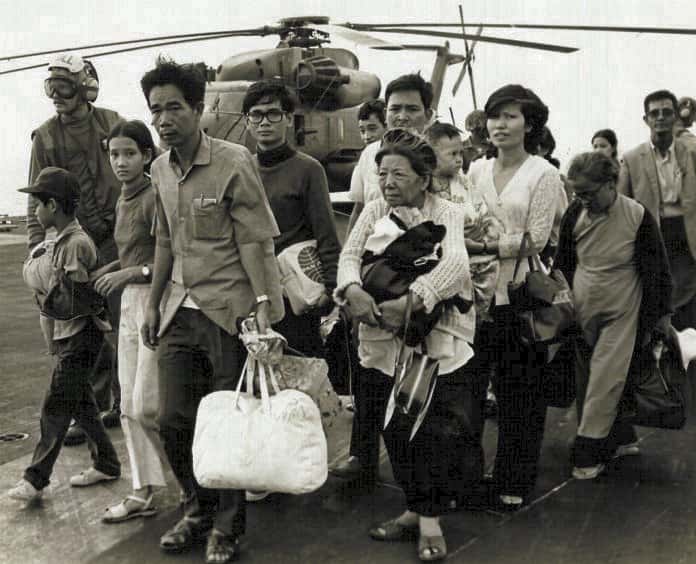
Having already drawn down its military footprint substantially after the Paris Peace Accords in 1973, the United States launched Operation Frequent Wind—a massive helicopter evacuation that would go down as the largest of its kind in history. Across several days, American personnel along with tens of thousands of South Vietnamese civilians were ferried by air from the U.S. Embassy and various other sites to naval vessels stationed offshore. The final flights wrapped up in the early hours of April 30, mere moments before Saigon was overtaken.
South Vietnamese President Dương Văn Minh took to the airwaves at approximately 10:24 a.m. to declare his government's unconditional surrender. Moments later, North Vietnamese tanks came crashing through the gates of the Presidential Palace, bringing the war to its definitive close. Before long, the city received a new name—Ho Chi Minh City—chosen to honor the iconic North Vietnamese leader.
The ramifications of Saigon's fall were sweeping and far-reaching. Vietnam saw its long-divided halves brought together again under communist governance after years of warfare and separation. In the United States, the moment prompted deep soul-searching over a war that had torn its society apart and raised serious questions about its approach to foreign policy. A massive refugee crisis followed in the wake of these events, as hundreds of thousands of Vietnamese fled their homeland in desperate pursuit of safety and the possibility of starting over in new countries.
Today, April 30 carries very different meanings depending on who is observing it. Within Vietnam, the date is marked as Reunification Day and celebrated as a national holiday. For many Vietnamese expatriates and refugees, however, it is known as "Black April"—a solemn occasion dedicated to mourning and remembering the devastating loss and displacement that defined that era.
Even now, the Vietnam War and the fall of Saigon cast a long shadow, continuing to shape conversations about military intervention, foreign policy strategy, and the tremendous human toll that war exacts.