The downfall of the Third Reich didn't culminate in some dramatic final battle—it ended with a single gunshot deep underground. Adolf Hitler, the dictator responsible for dragging Europe into devastating conflict, killed himself inside the Führerbunker on April 30, 1945, while Soviet troops fought their way through Berlin above him. It was the last defiant act of a leader who would never allow himself to be taken alive.
Germany lay shattered by late April. From the west, Allied forces pushed forward relentlessly. From the east, the Red Army tightened its grip. Berlin itself had descended into total chaos. The man who once wielded absolute power now cowered beneath the earth, cut off from reality and abandoned by those closest to him.
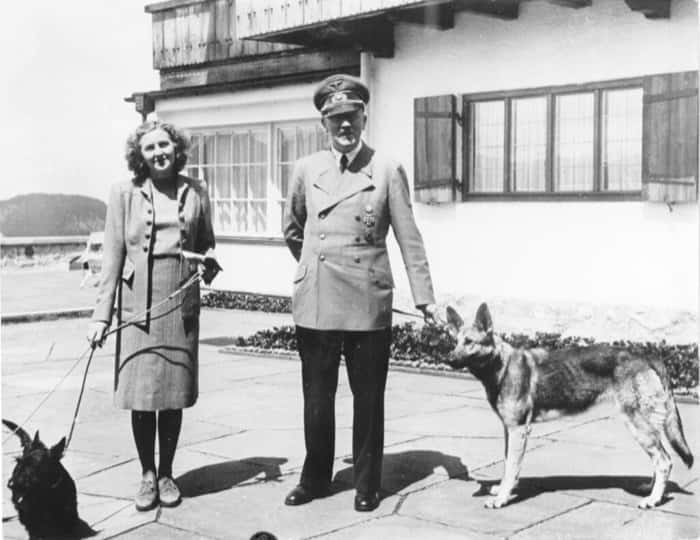
Just after midnight on April 29, Hitler wed Eva Braun, his longtime partner. His mind was already made up—capture was not an option. The following afternoon, the newly married couple withdrew into his private study. By around 3:30 p.m., both were dead: Braun had taken cyanide, while Hitler shot himself in the head. Those present would later describe the lingering smell of gunpowder and cyanide filling the room. In the hours before his death, Hitler had dictated a will that designated Admiral Karl Dönitz as his successor. He also left strict instructions for both his and Eva's bodies to be burned—word had reached him that Mussolini's corpse had been desecrated following his execution, and Hitler was determined to avoid the same humiliation.
Aides carried the two bodies out of the bunker, soaked them in petrol, and lit the flames. What was left behind was nearly unrecognizable. Soviet troops arrived in the area shortly afterward, setting off decades of speculation, misinformation, and conspiracy theories surrounding what really happened to Hitler.
Though his suicide didn't bring an immediate end to the fighting, it effectively shattered what remained of Nazi leadership. Germany's surrender followed within a week. The man who had boasted of building a thousand-year Reich saw it crumble after just twelve years. Hitler's death in a bunker beneath the ruins of the Reich Chancellery marked more than the end of one man's life—it was the implosion of an entire brutal regime.