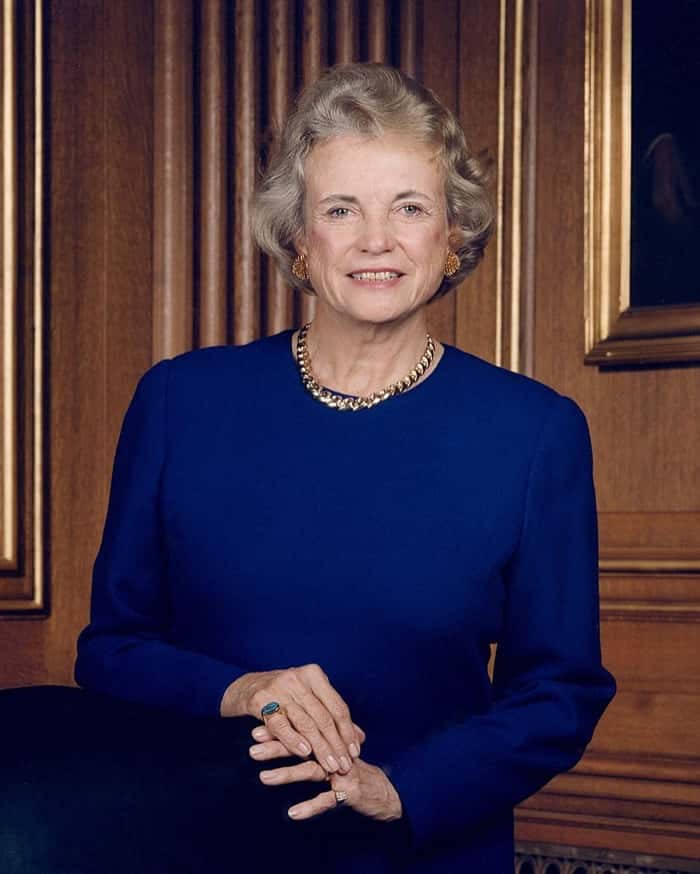
On April 3, 1995, the U.S. Supreme Court witnessed a moment that would resonate through the annals of American legal history. Justice Sandra Day O'Connor — who had already shattered a glass ceiling as the first woman ever appointed to the nation's highest bench — took on another groundbreaking role that day, officially becoming the first woman to preside over the U.S. Supreme Court. It was yet another chapter in her extraordinary legacy as a pioneer in the American judiciary.
Born in 1930 in El Paso, Texas, O'Connor spent her early years on an isolated cattle ranch before making her way to Stanford University, where she completed her law degree. Even though she graduated near the very top of her class, widespread gender discrimination meant that numerous law firms turned her away. Undeterred, she carved a path through public service with remarkable determination, rising through the ranks as a state senator, a judge, and ultimately earning a seat on the Arizona Court of Appeals.
President Ronald Reagan delivered on a campaign pledge in 1981 when he put forward a historic nomination to the U.S. Supreme Court — the first female justice in the institution's history. The Senate confirmed her unanimously, a moment that represented a watershed shift for the nation's highest court.
On April 3, 1995, with Chief Justice William Rehnquist temporarily away, O'Connor assumed the role of acting Chief Justice — making her the first woman in history to hold that position.
Throughout her time on the bench (1981–2006), O'Connor became widely recognized for her judicial approach and frequently cast the deciding vote in tightly contested cases. Among her most notable and influential rulings were the following:
- Planned Parenthood v. Casey (1992)
- Bush v. Gore (2000)
- Grutter v. Bollinger (2003)
Even after stepping down from the Court in 2006, O'Connor kept up an active role in promoting judicial reform and civic education. She launched iCivics, a free online platform offering educational materials and interactive games designed to teach students about civics and encourage them to become engaged citizens. The Presidential Medal of Freedom — the nation's highest civilian honor — was bestowed upon her in 2009. Her lasting influence on gender equality, legal precedent, and the fabric of American democracy continues to reverberate to this day.