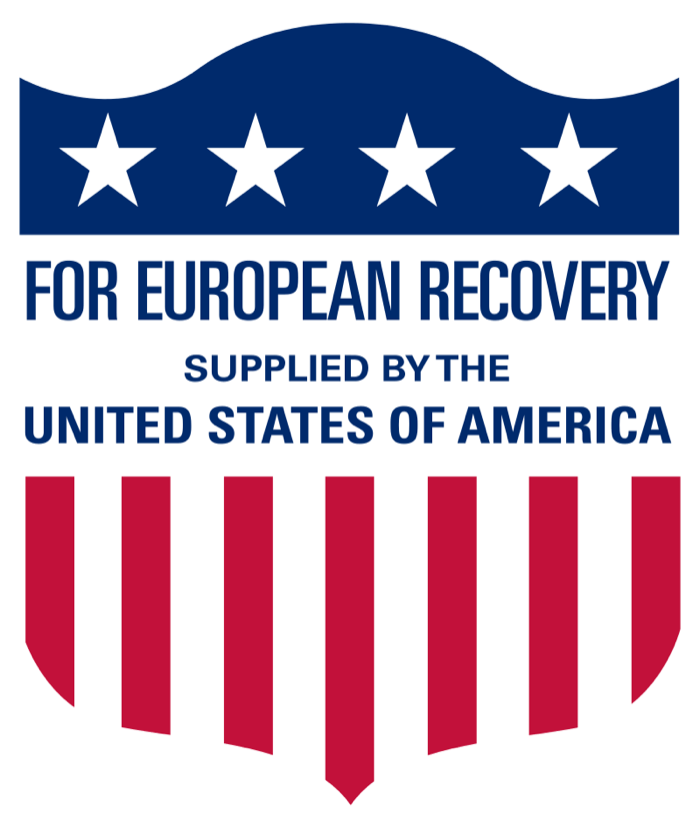
The European Recovery Program (ERP) — better known as the Marshall Plan — became law on April 3, 1948, when President Harry S. Truman put pen to paper. At its core, this ambitious program aimed to lift war-torn Europe back on its feet, hold the line against communist expansion, and bring economic stability back to the continent. Over a four-year span, Western European countries received $13.3 billion in American aid, a sum equivalent to approximately $133 billion in today's dollars.
World War II had left Europe, once a powerhouse of civilization, utterly devastated. Economies were shattered, cities lay in rubble, and millions faced the daily realities of hunger and displacement. Making matters worse, the brutal winter of 1946-1947 deepened the suffering considerably, turning an already desperate situation into one that demanded immediate action and large-scale rebuilding efforts.
It was against this bleak backdrop that U.S. Secretary of State George C. Marshall stepped forward with a bold vision for European recovery. Speaking at Harvard University on June 5, 1947, he laid out a compelling case for urgent economic support. That speech set the wheels in motion — Congress gave its approval in March 1948, and Truman officially signed the plan into law on April 3, 1948.
The Marshall Plan had several objectives:
- Rebuild Infrastructure
- Boost European Economies
- Prevent Communism
- Encourage Cooperation
Funds were allocated according to each nation's level of need, with the largest industrial powers drawing the biggest portions:
- United Kingdom: 26%
- France: 18%
- West Germany: 11%
An invitation to join was extended to the Soviet Union, but Joseph Stalin turned it down and instead launched the Molotov Plan as a rival initiative.
The results spoke for themselves. By 1952, every participating nation had not only bounced back but actually exceeded pre-war economic benchmarks. Industrial and agricultural output surged, trade barriers came down, and Western Europe entered an era of economic expansion unlike anything seen before. Historians widely credit the Marshall Plan — a powerful demonstration of what international cooperation can achieve — with establishing the foundation for Europe's modern-day prosperity.
When the Marshall Plan wrapped up in 1951, the Mutual Security Act stepped in to carry on the flow of American assistance. Beyond its immediate impact, the program also helped give rise to institutions like the OECD (Organization for Economic Co-operation and Development), an organization that continues fostering economic collaboration to this day.