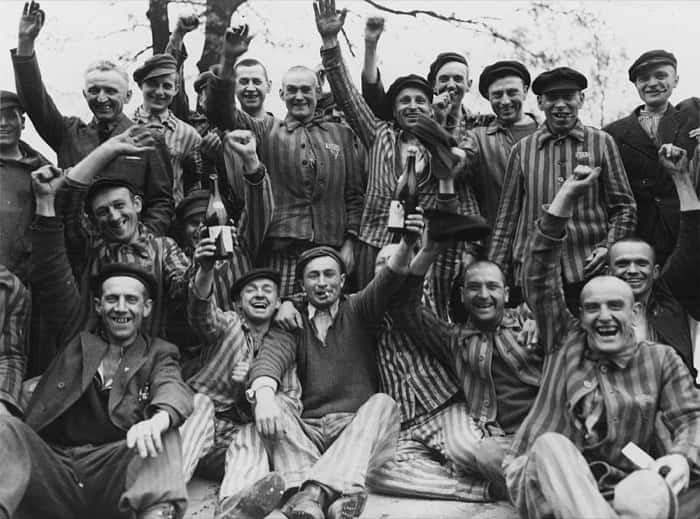
When the U.S. Army's 45th Infantry Division reached the Nazi concentration camp just northwest of Munich on April 29, 1945, they weren't prepared for what awaited them. The gates of Dachau swung open that day — not as an entrance, but as a threshold between captivity and liberation. What lay beyond was beyond comprehension.
No other camp in the Nazi system carried the grim distinction that Dachau did: it was the very first concentration camp the regime ever built. Established in 1933, it became the blueprint for every camp that would follow across Europe. Its prisoners included political opponents, religious dissenters, Roma, LGBTQ+ individuals, and eventually thousands of Jews.
Before the soldiers even set foot inside, they came upon a gruesome sight — 30 rail cars filled with corpses, emaciated and decomposing, simply cast aside. Within the camp walls, more than 30,000 survivors were barely holding on. Starvation, disease, and abuse had spiraled out of control in the final days, leaving many prisoners skeletal, gravely ill, and unable to stand. But Dachau's horrors went far beyond imprisonment. It functioned as a hub of pseudo-science, where prisoners served as human test subjects — subjected to malaria, tuberculosis, freezing temperatures, and chemical experiments. Countless others endured brutal forced labor in service of Nazi war production.
With Allied forces closing in during April 1945, Nazi officers drove 7,000 prisoners out of Dachau on a death march. Guards began abandoning their posts. When American troops finally arrived, a short firefight broke out with those who had stayed behind. In the emotionally charged hours that followed, some U.S. soldiers executed captured SS guards — an unsanctioned act fueled by the sheer horror and fury of what they had witnessed.
Over the course of its existence, more than 160,000 prisoners passed through Dachau's gates. At least 32,000 lost their lives there. In the postwar years, the testimonies of survivors proved essential in documenting Nazi crimes. Today, Dachau endures as a memorial — a solemn reminder of humanity's capacity for cruelty and a testament to the resilience of those who survived it.