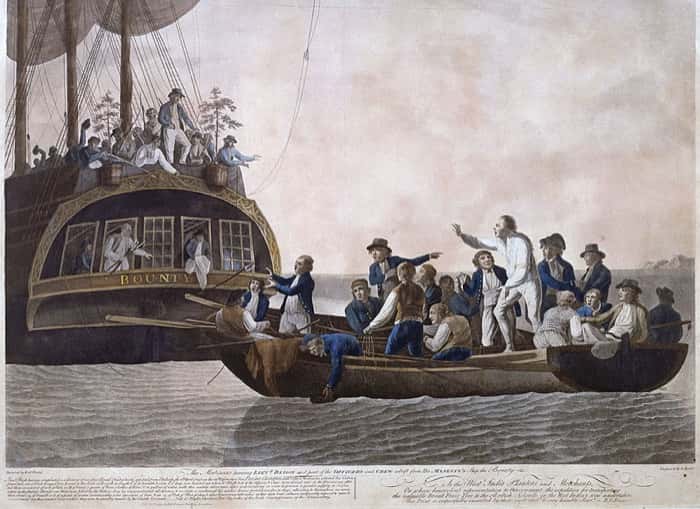
What happened on the morning of April 28, 1789, would become one of the most legendary episodes in maritime history. Fletcher Christian, serving as master's mate, led a brazen takeover of the British ship, wresting command from Lieutenant William Bligh, its captain. The dramatic revolt has captivated historians, students, educators, and storytelling enthusiasts for centuries, fueling endless myth, debate, and fascination.
The Bounty had departed England in 1787 on a mission to gather breadfruit plants from Tahiti and transport them to the West Indies. The goal behind this venture was straightforward: introduce a high-yield, low-maintenance crop that could serve as a cheap and reliable food source for the enslaved workers toiling in the Caribbean.
The expedition was commanded by Bligh, who had previously sailed with Captain Cook. Conditions aboard the ship, however, were cramped, discipline was rigid, and tensions frequently ran high. Making matters worse, the crew had spent five indulgent months on Tahiti, forming close relationships with the local population — and the return to grueling naval routine proved deeply unwelcome. Christian, who had once been Bligh's protégé, increasingly found himself the target of the captain's fury, stoking the simmering discontent that had already taken root among the men.
A mere three weeks after departing Tahiti, that discontent erupted. In the early morning hours, Christian and a small band of armed sailors seized the ship. They dragged Bligh from his cabin, bound him, and forced him into a small launch alongside 18 loyal crew members. Equipped with only a few days' worth of supplies, the group was cast adrift on the open ocean. But Bligh's ordeal was just beginning. Relying on nothing more than basic navigation tools, he guided the tiny vessel an astonishing 3,500 nautical miles to reach safety in Timor — a feat of seamanship and sheer endurance that remains remarkable to this day. Christian and his fellow mutineers, meanwhile, tried their luck settling first on Tubuai, then Tahiti, and ultimately Pitcairn Island. By the time they were finally discovered, just one mutineer — John Adams — was still alive. The others had been claimed by internal conflict, disease, or violence against one another.
In England, Bligh received a hero's welcome. The search vessel HMS Pandora managed to apprehend some of the mutineers, though many were lost when the ship was wrecked. Of those who stood trial, three were sentenced to hang. The remainder received pardons or were acquitted — bringing the legal chapter of the mutiny to a close, even as the story of the mutineers lived on.